Tree Trimming in Duluth, MN — Residential & Commercial Tree Pruning Specialists
Deadwood over the driveway, limbs on the roof, and conifers carrying too much weight on the ends. Pruned to the branch collar, on the right cuts, in the right season.
Tree Trimming in Duluth, MN
Duluth Elite Treecare is a local resource for tree trimming and pruning throughout Duluth, the Twin Ports and the surrounding Northland. We help homeowners connect with experienced arborists who do crown work the way it is supposed to be done — proper cuts, correct timing, and no topping.
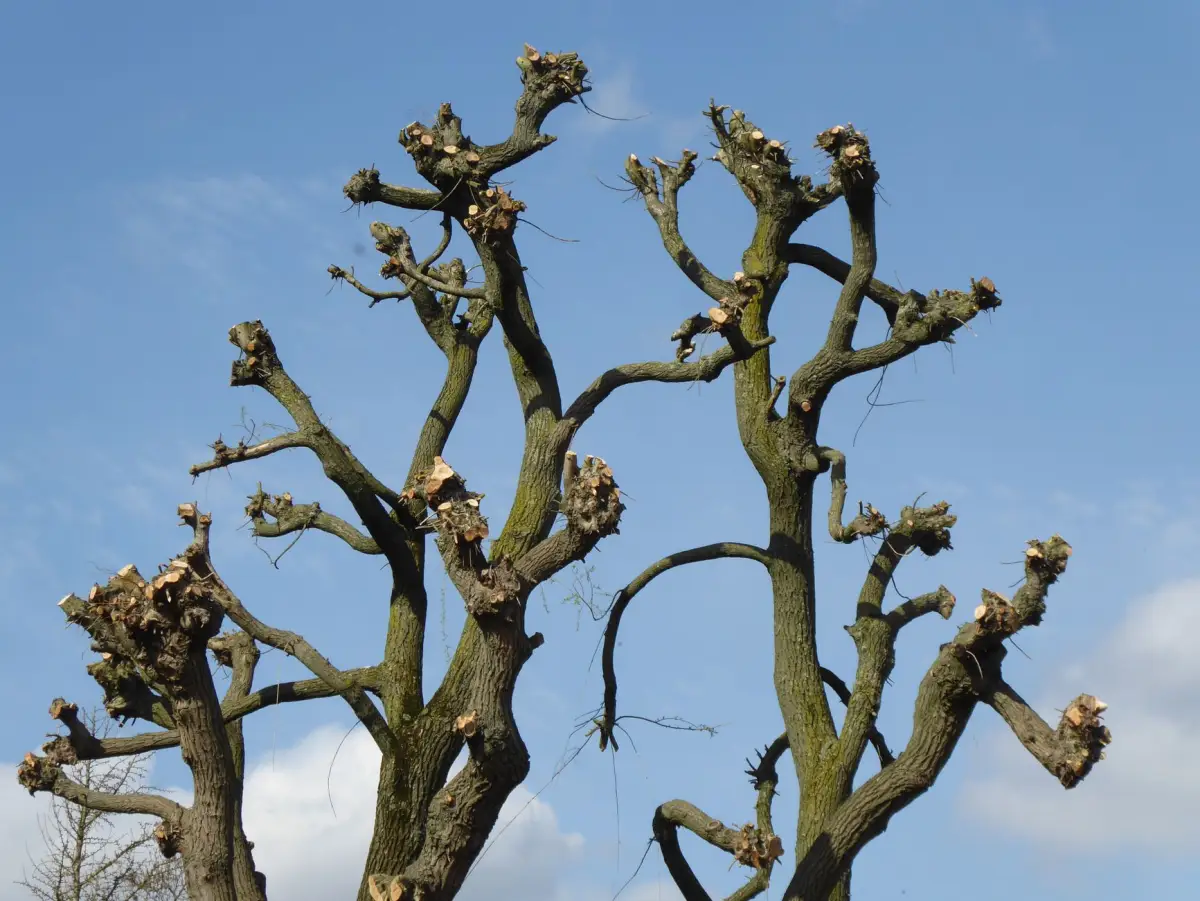
Good pruning is mostly about which cuts do not get made. Every cut is a wound, and a tree closes a wound from the branch collar outward, so a cut placed just outside that collar seals and a flush cut into the trunk does not. That single distinction separates work that improves a tree from work that shortens its life, and it is why the ANSI A300 standard exists. Topping — heading big limbs back to stubs — is the version of this that still gets sold door to door in Duluth after every windstorm. It does not reduce risk. It produces a flush of weakly attached regrowth that fails harder in the next storm than the original limb would have.
Timing matters more here than in most of the country. UMN Extension puts the best window for pruning most trees at late winter into early spring, when the tree is dormant, the wood is firm and there is no leaf mass to fight. Oaks are the exception with a hard rule attached: the Minnesota DNR asks that oaks not be pruned or cut from April through July, because sap beetles carrying oak wilt spores are active then and are drawn straight to a fresh wound. The DNR has confirmed oak wilt in 31 Minnesota counties. Waiting until after mid-July, or until the tree is dormant, costs nothing.
What’s Included in a Duluth Tree Trimming Quote
- Deadwooding — removing dead, broken and hanging limbs throughout the crown
- Crown thinning and crown reduction to cut wind sail and end weight, without topping
- Crown raising for clearance over drives, walkways, roofs and gutters
- Cuts placed at the branch collar, sized and located to ANSI A300 — no flush cuts, no stubs
- Structural pruning on young and mid-age trees to correct co-dominant stems early
- Brush chipped and hauled, work area raked out, no climbing spikes on a tree that is staying
Tree Trimming & Pruning in Duluth, MN
Routine Tree Trimming
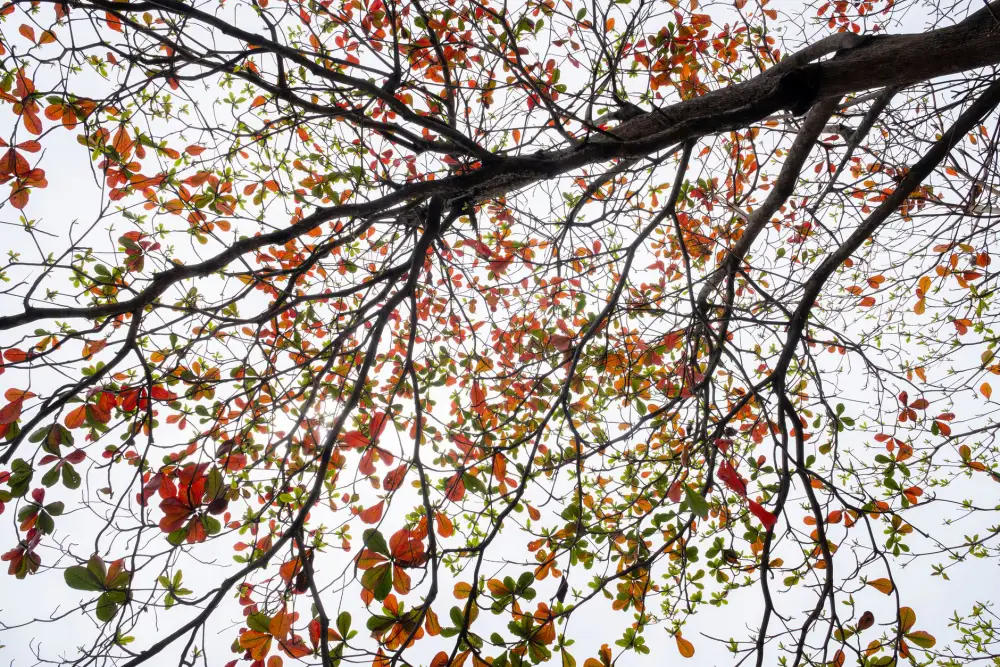
Routine trimming is the maintenance cycle that keeps a tree off the house and out of the way — clearance over the driveway, limbs off the gutter line, sightlines opened at the end of a Lakeside drive. On a healthy hardwood it comes around every three to five years; on a fast-growing silver maple or a boulevard-adjacent tree competing for light it can be sooner. The mistake is treating it as a haircut and taking a uniform amount off the outside. Trimming that removes the same percentage all the way around strips interior growth and leaves the weight on the ends, which is lion-tailing, and it makes limbs more likely to fail, not less.
Tree Pruning
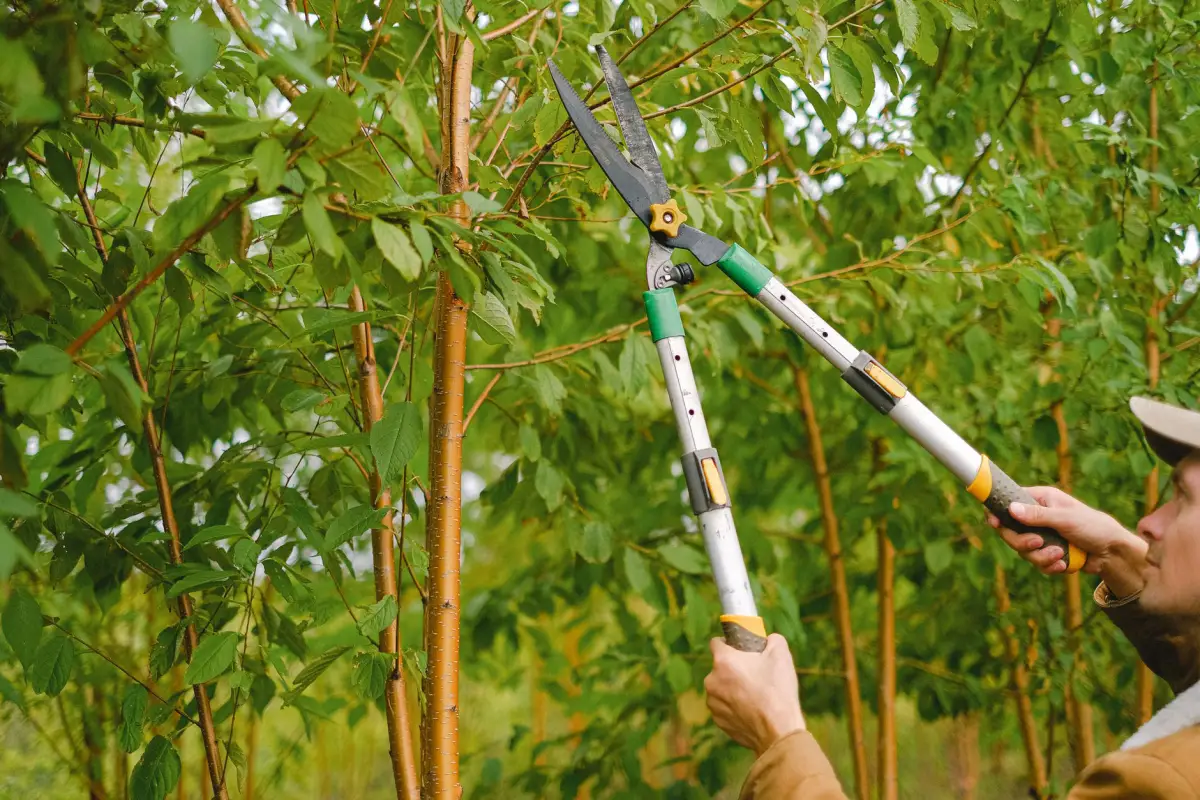
Pruning is the part that is about the tree rather than the house. It means choosing individual branches for a reason — a rubbing pair, a limb growing back into the centre, a stem with included bark that will split at the union in twenty years — and cutting them at the branch collar so the wound seals cleanly. Timing follows the season: UMN Extension puts the best window for most species at late winter into early spring, and the Minnesota DNR asks that oaks not be pruned or cut from April through July because oak wilt is moving through sap beetles drawn to fresh wounds. A pruning plan that ignores the calendar is not a pruning plan.
Dead & Diseased Branch Removal
Deadwood comes out because it will come out on its own eventually, and rarely at a convenient moment. In Duluth that is usually the upper crown of an ash, a spruce shading out its own lower limbs, or a maple that lost a leader in a wet snow event and never closed the wound. The cut itself is the whole job: dead wood has often decayed back past the point where a collar is obvious, so the cut has to be read off the branch bark ridge and the swelling at the base rather than guessed. Diseased limbs add a sanitation step, since tools that just cut through infected tissue can move the problem to the next tree.
Tree Crown Reduction & Thinning
These are two different jobs that get confused constantly. Reduction shortens limbs back to a lateral large enough to take over as the new leader — roughly a third the diameter of the limb removed — which lowers the height and pulls weight in off the ends without leaving stubs. Thinning removes whole branches at their origin to open the crown so wind passes through instead of pushing against it. Both matter here for the same reason: wet lake-effect snow off Superior loads white pine, spruce and balsam far heavier than dry inland snow, and limb failure in Duluth is a weight problem before it is a wind problem. Reduction is the legitimate version of what topping pretends to be.
Tree Clearance Around Homes & Structures
Clearance work is the most common request and the one most likely to be done badly, because the target is a roofline rather than the tree. Limbs get raised off shingles and gutters, pulled back from siding and chimneys, and lifted over drives so a delivery truck clears. The constraint is how much live crown can come off at once — take too much and the tree responds with a mass of weak watersprouts that puts the limbs back over the roof within a few seasons. Where the limbs are into a power line, that is not this job at all: line clearance belongs to the utility that owns the line, and they normally do it at no cost.
Signs You Need Tree Trimming
- Branches touching the roof, rubbing on siding, or dumping needles into the gutters every fall
- Dead limbs visible in the upper crown, or a scatter of sticks on the lawn after every wind event
- A limb that failed in a wet snow load and left a torn stub still hanging in the tree
- The crown has grown dense enough that the lawn under it has thinned out and the tree sways hard in wind
- Two main stems meeting in a tight V with bark growing into the union rather than a raised ridge
- Sightlines blocked at the end of a driveway, or low limbs a delivery truck keeps catching
How Tree Trimming Works
- 1
Set the objective before touching the tree
Pruning without a stated objective is how trees get over-cut. The first step is naming what the work is for: clearance over a roof, deadwood removal, weight reduction on a limb that is overextended, structural correction on a young tree. Those lead to different cuts in different places, and some of them conflict — the pruning that gives maximum clearance is not the pruning that leaves the healthiest tree. Species and season get settled here too. Most trees prune best in late winter into early spring per UMN Extension, and oaks come off the table from April through July under the Minnesota DNR's oak wilt guidance. So does the limit on how much live crown can be removed in one visit, which is lower on a mature tree than a young one, and lower again on a tree already under stress.
- 2
Read the crown from the ground and from in it
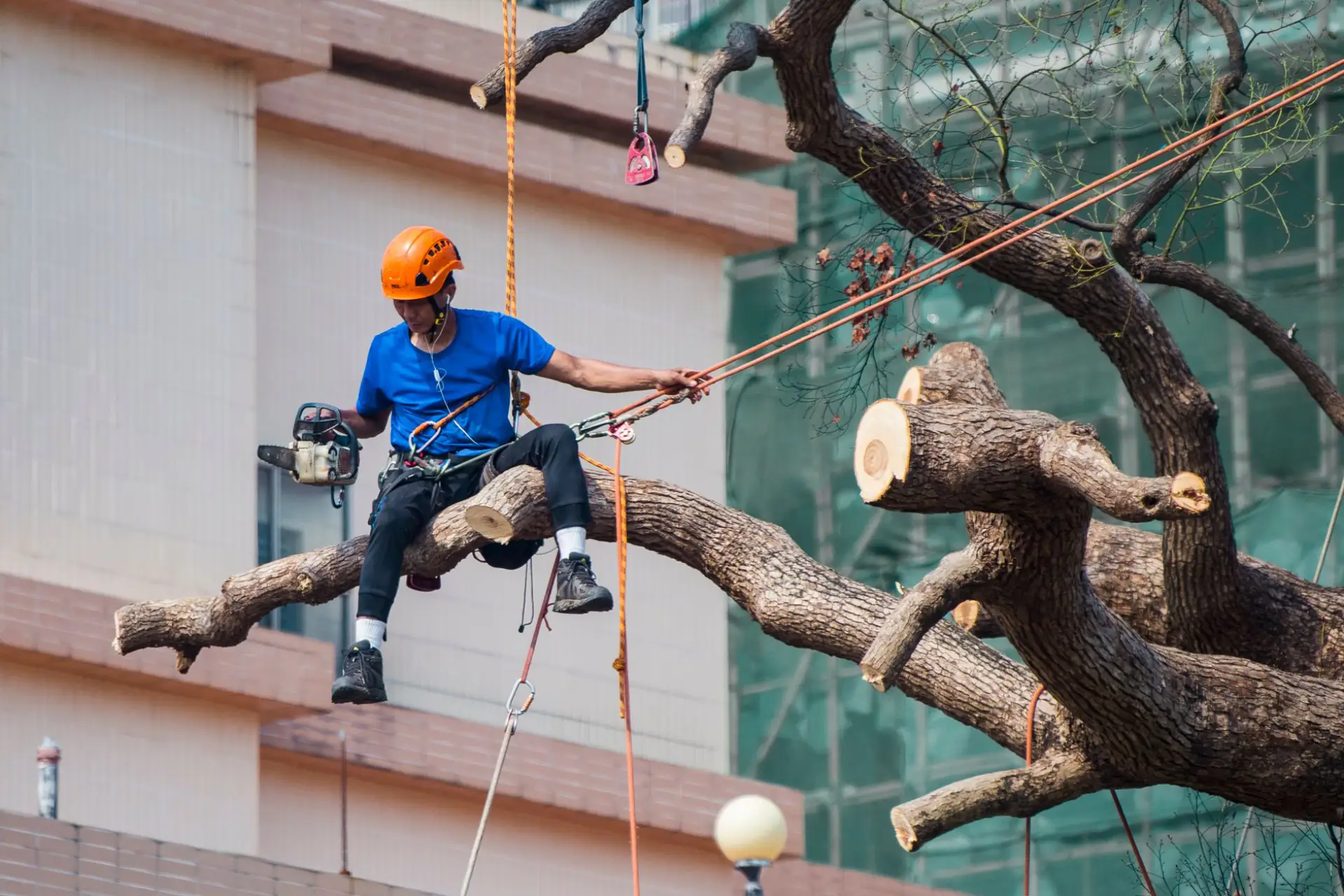
A crown looks different from underneath than it does from inside, so the assessment happens twice. From the ground: overall balance, lean, which limbs are overextended, where deadwood is concentrated, what is over the house. From in the tree: the unions. Co-dominant stems with included bark, cracks running out of a union, decay pockets where an old limb tore out, whether the branch collar on a dead limb is still readable. Climbing is done on rope and saddle, not spikes — spikes puncture the cambium and belong only on a removal. The route through the tree gets planned so the climber is never working above an unsecured cut, and so limbs coming out do not have to be dragged back through the crown.
- 3
Make the cuts, in order, at the collar
Anything heavy gets the three-cut method: an undercut a foot or so out from the collar, a top cut further out to drop the weight, then the final cut at the collar with no weight left to tear bark down the trunk. The final cut sits just outside the branch collar and just outside the branch bark ridge — not flush with the trunk, which removes the tissue the tree seals from, and not left as a stub, which never seals at all. Reduction cuts go back to a lateral at least a third the diameter of what was removed, so there is a limb big enough to take over as the new leader. Wound dressing does not go on; it slows closure rather than helping it. Work proceeds from the top down and around the tree so the crown stays balanced.
- 4
Rig it down, chip, and check the result from the ground
Limbs over a roof, a fence or a garden bed get tied and lowered rather than dropped, on a line run through a block set above the cut. Where a limb has to travel sideways to reach open ground, a speedline carries it out. Brush goes through the chipper as it comes down so the work area stays clear. Oak brush and oak wood get handled with the calendar in mind, since the DNR also cautions against moving fresh oak firewood, which spreads oak wilt to new areas. Then the tree gets looked at from the ground, from the street, and from wherever you actually see it from — a crown that was balanced from inside can read lopsided from the driveway, and that is the view that has to be right.
What Does Tree Trimming Cost in Duluth, MN?
- Crown size and height, and whether the work can be reached from the ground, a lift, or only by climbing
- How much of the job is fine deadwooding versus removing large limbs that have to be rigged and lowered
- What is underneath — every limb over a roof, fence or garden bed has to be lowered rather than dropped
- Species and season, including the April-through-July window when oaks should not be cut at all
- Whether it is a first prune on a neglected tree or a maintenance cycle on one already on a schedule
- Access for a chipper, and how far brush has to be dragged to reach it
- Number of trees — several trees in one visit costs less each than the same trees on separate visits
The cheapest quote on a trimming job is often the one that plans to top the tree, because topping is faster than pruning and needs less skill. It also costs you the tree eventually, and it costs you again when the weak regrowth has to be cleaned up in a few years. If a price comes in far under the others, ask specifically where the cuts will be made and how much live crown is coming off. A company that cannot answer that in plain language is quoting a haircut, not a prune.
What to Look for in a Duluth Tree Trimming Company
They refuse to top a tree
Ask directly. A company that will top a tree on request will do it to yours, and there is no version of topping that leaves the tree better than it was.
They talk about the calendar
Anyone who offers to prune your oak in May either does not know about oak wilt or is not letting it get in the way of the invoice. Both are a problem.
They climb on rope, not spikes
Spikes wound the cambium the whole way up. On a removal that is irrelevant. On a tree that is staying, it is damage you paid for.
They can explain the cut
Branch collar, branch bark ridge, reduction back to a lateral a third the diameter. It is not jargon for its own sake — it is the difference between a wound that seals and one that does not.
They quantify how much is coming off
A percentage of live crown, not "we'll take it back a bit." Over-thinning a mature tree in one visit is a common and expensive mistake.
Residential & Commercial Tree Trimming
Residential
Yard trees, clearance over roofs and driveways, deadwooding mature hardwoods, and structural pruning on young trees before small problems set. Most residential trimming here is a half or full day covering two to six trees on one property.
Commercial
Parking lot canopies, walkway and signage clearance, and scheduled maintenance rounds on commercial grounds. Work on business property is normally staged outside customer hours — see the commercial tree trimming page for how that is handled.
When Tree Trimming Isn’t the Right Call
- You want the tree topped. That is not a service worth arranging, at any price. If the tree is genuinely too big for the space, the honest options are crown reduction done properly or removal — and one of those two conversations is worth having.
- It is an oak and it is April through July. The Minnesota DNR is direct about this: do not prune or cut oaks in that window, because sap beetles carrying oak wilt spores go straight to fresh wounds. Unless a limb is an active hazard, it waits until after mid-July or until dormancy.
- The limbs are growing into a power line. Line clearance is the utility owner's responsibility — Minnesota Power, CenturyLink or Charter — not the city's and not a tree service's. It is normally done at no charge to you, so call them before paying anyone.
- It is the boulevard tree in front of your house. The city plants, prunes and maintains those, and residents are not permitted to run power equipment on city property under City Code Section 35-28(a)(2).
- You can reach it from the ground with a pole saw and it is a couple of small limbs. That is a Saturday, not a service call.
- The tree is dead. Pruning a dead tree is money spent on something that still has to come down. Price the removal instead.
Frequently Asked Questions
- When is the best time to trim trees in Duluth?
- Late winter into early spring for most species, which is what UMN Extension recommends — the tree is dormant, structure is easy to read with no leaves in the way, and wounds close quickly once growth starts. Dead and hazardous limbs can come out any time. Oaks are the hard exception: the Minnesota DNR asks that oaks not be pruned or cut from April through July, when sap beetles spreading oak wilt are most active and most attracted to fresh cuts.
- What is the difference between tree trimming and tree pruning?
- In practice the words get used interchangeably, but the useful distinction is the objective. Trimming is usually about the surroundings — clearance over a roof, a driveway, a walkway. Pruning is about the tree — removing deadwood, correcting structure, reducing end weight on an overextended limb. The same climber does both on the same visit, and the cuts are made the same way. It is worth being clear which one you are asking for, because a quote for clearance and a quote for structural pruning are different jobs.
- Why is topping a tree bad?
- Topping cuts large limbs back to stubs with no lateral branch left to take over. The tree responds with a dense flush of watersprouts that are attached only to the outer wood, so they grow fast, get heavy, and fail more readily than the limb that was removed. Meanwhile the stub cannot seal, so decay works down into the trunk. It is sold as risk reduction and it produces the opposite. Crown reduction — shortening limbs back to a lateral large enough to become the new leader — is the legitimate way to make a tree smaller.
- How much of a tree can be pruned at once?
- Less than most people expect, and less on an old tree than a young one. Leaves are how a tree pays for itself, so removing a large share of live crown in one visit puts it into deficit and often triggers a stress response of weak, dense regrowth. Deadwood is free — taking it out costs the tree nothing since it is already gone. A neglected tree that needs a lot of work is usually better staged over two visits a season or two apart than forced into one aggressive cut.
- Do I need to seal or paint pruning cuts?
- No. Wound dressings and pruning paints slow the tree's own closure process rather than helping it, and they can trap moisture against the wound. A cut placed correctly just outside the branch collar seals on its own. The one context where covering a wound is discussed is an oak pruned during the high-risk oak wilt window — and the better answer there is not to make the cut in that window at all.
- Will trimming fix a tree that keeps dropping limbs in snow?
- Often, if it is done as reduction and thinning rather than as a trim. Wet lake-effect snow off Superior loads conifers far heavier than dry inland snow, so the goal is pulling weight in off the ends of limbs and opening the crown enough that snow and wind pass through. What will not fix it is taking a uniform amount off the outside, which strips interior growth and leaves all the remaining weight at the tips — the exact loading pattern that causes the failures in the first place.
Learn More
- UMN Extension — Pruning Trees and Shrubs — Where to place a pruning cut, the three-cut method for heavy limbs, and why late winter into early spring is the preferred window for most species.
- Minnesota DNR — Oak Wilt — Why oaks should not be pruned or cut April through July, how sap beetles move the fungus to fresh wounds, and the counties where oak wilt is confirmed.
- City of Duluth — Urban Forestry FAQs — Who prunes boulevard trees, who handles clearance around utility lines, and the City Code section covering work on city trees.
Need Tree Trimming in Duluth, MN?
Tell us what’s going on and get an on-site estimate — no charge for the visit, and no obligation to book the work.
Get My Free Estimate