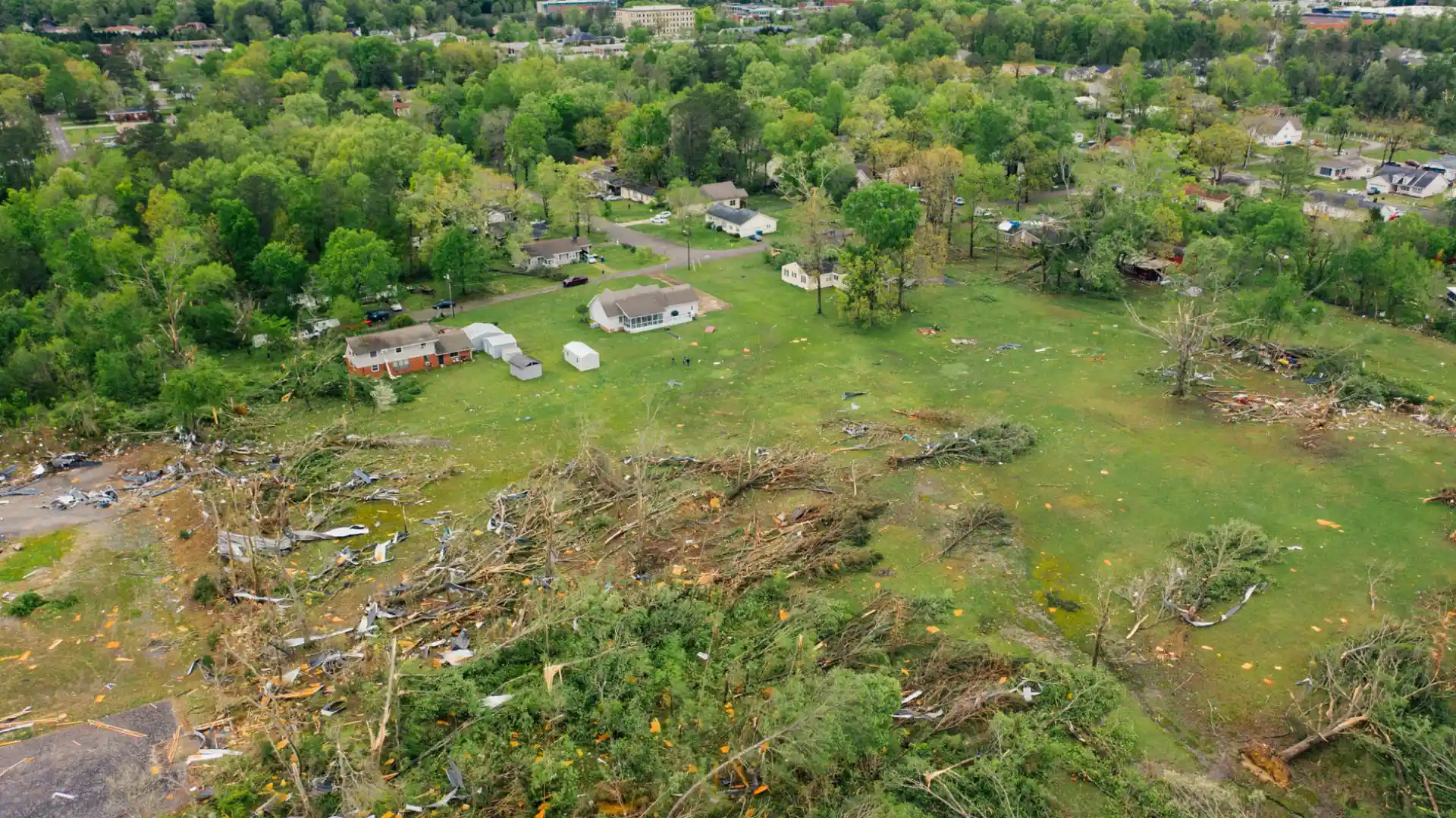
Storm Damage Tree Cleanup in Duluth, MN — Residential & Commercial Debris Removal
After the wind drops and the wet snow slides off. Broken limbs out, damaged trees assessed, debris chipped and hauled, yard put back in order.
Storm Damage Tree Cleanup in Duluth, MN
Duluth Elite Treecare is a local resource for storm damage tree cleanup throughout Duluth, the Twin Ports and the surrounding Northland. We help homeowners connect with experienced tree care professionals for the work that comes after a storm — the fallen trees, the broken tops and the debris left across the yard.
This is the job after the emergency. If a tree is still on your house or a limb is hung up over the drive, that is an active hazard and it belongs on the emergency tree service page — call it in as one. Storm cleanup is what is left when nothing on the property is going to move on its own any more: a spruce down across the back lawn, a maple that lost a leader, brush everywhere, and three trees that came through looking rough enough to worry about. It is scheduled work, and it should be priced like scheduled work.
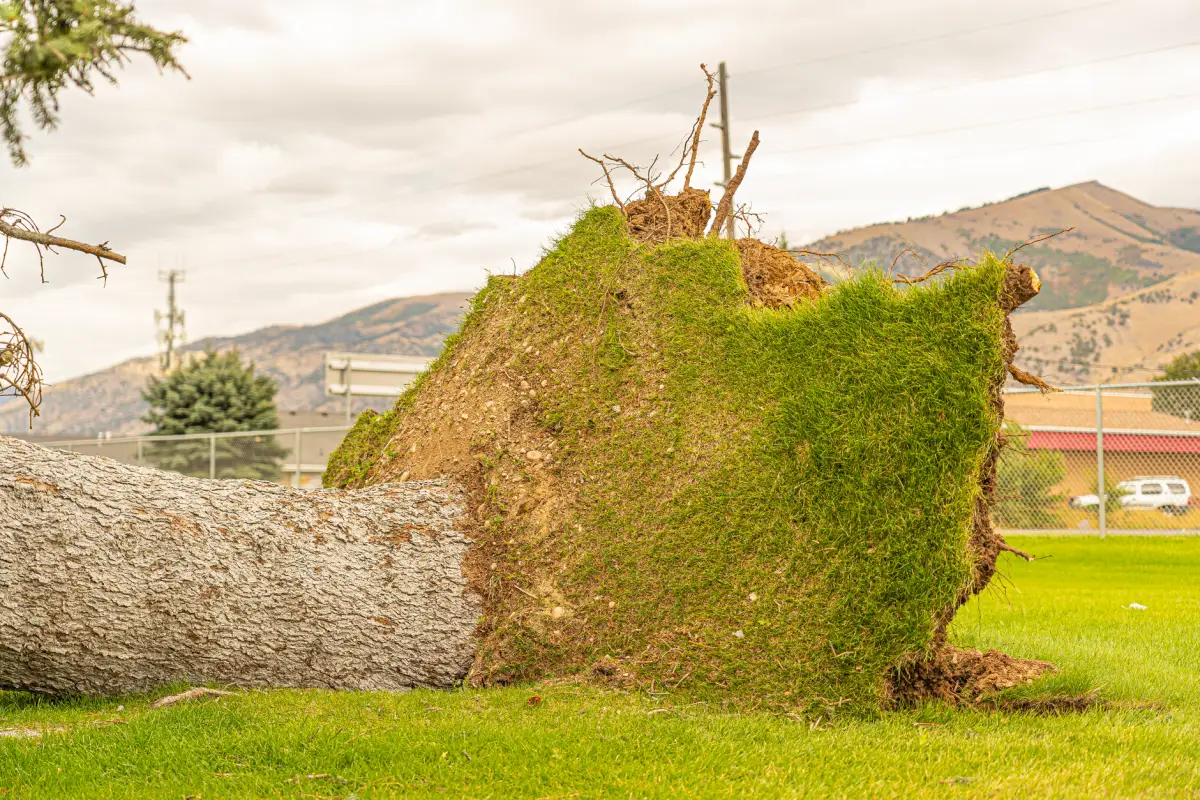
Duluth breaks trees in a particular way. Wet lake-effect snow off Superior loads white pine, spruce and balsam far heavier than dry inland snow, so limb failure here is a weight problem before it is a wind problem — tops snap out, whole sides of a conifer fold down, and the tree stands there afterwards looking half-intact. The other pattern is wind off the lake landing on saturated clay after a spring thaw, which is how a healthy-looking conifer ends up flat with its root plate lifted and no rot anywhere in the trunk. The two need different decisions afterwards, and telling them apart is most of the assessment.
What’s Included in a Duluth Storm Damage Tree Cleanup Quote
- Assessment of every storm-affected tree — which are sound, which are worth keeping, and which have to go
- Removal of trees that came down or were damaged past saving
- Broken tops, split limbs and hangers cleared out of crowns that are otherwise staying
- Torn stubs cut back properly to the branch collar so the wound can actually close
- Brush chipped, trunk wood cut to rounds or hauled off, lawn and beds raked out
- Photographs and an itemised invoice suitable for an insurance claim
Storm Damage Tree Cleanup in Duluth, MN
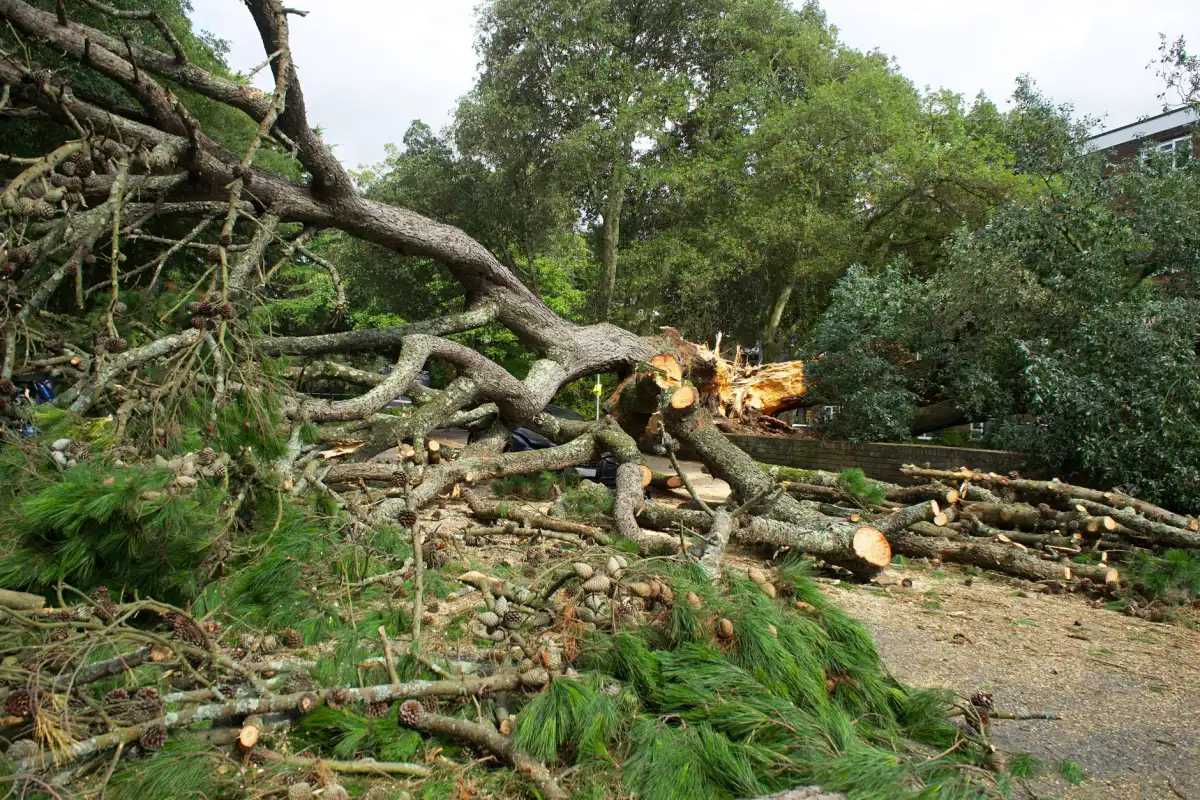
Storm-Damaged Tree Removal
Not every damaged tree needs removing, and the decision is worth making carefully because it is permanent. The rough guide used by UMN Extension is how much of the crown survived and whether the trunk and main leaders are intact — a tree that kept most of its crown and has no trunk damage usually recovers, while one that lost more than half, split down a main union, or has a lifted root plate generally does not. In Duluth the specific case to watch is a conifer that folded under wet snow: spruce and balsam do not regrow a leader convincingly, so a white pine with its top out often ends up a removal a few years later anyway.
Fallen Tree & Branch Cleanup
A tree already on the ground is the straightforward part of storm work, but it is not simply cut into pieces from one end. A trunk lying across a slope — which on Duluth's grade is most of them — is propped on branches that spring when they are released, and a butt still attached to a partly lifted root plate can rotate back into its hole once the top is taken off. The cutting sequence follows the loading rather than convenience. After that it is volume work: limbs chipped, trunk bucked to rounds and either stacked for firewood or hauled, and the lawn raked out where the crown landed.
Broken & Hanging Limb Removal
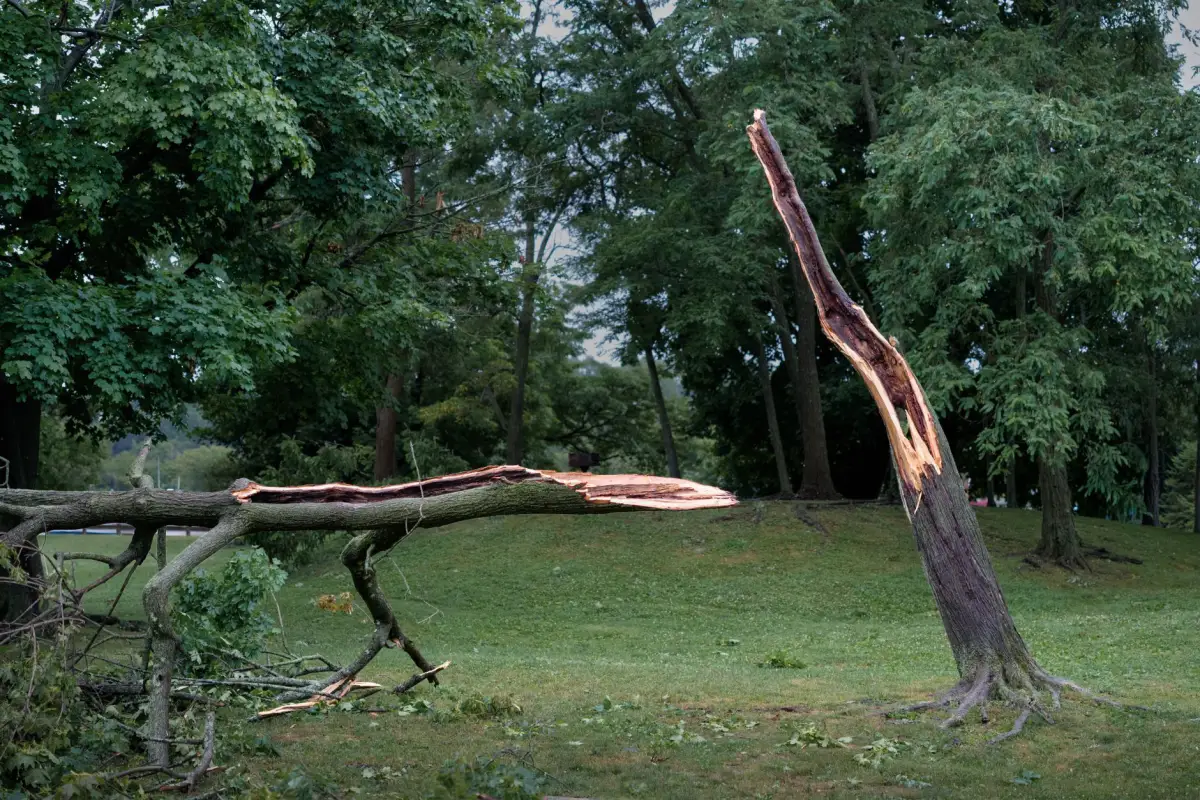
The limbs still in the tree are what makes a yard that looks finished actually not be. Hangers work loose over the following weeks, and a partly split limb keeps tearing further into the union every time the wind gets up. Both come out from above, on rope or from a lift, rather than by cutting from underneath. The part that gets skipped is the finish: a limb that tore out leaves a ragged stub and often a strip of bark peeled down the trunk, and unless that is cut back cleanly to the branch collar it will not seal and decay works into the stem. Storm cleanup that stops at removing the broken pieces leaves the tree worse off than it needs to be.
Wind-Damaged Tree Cleanup
Wind damage is often less visible than snow damage and more consequential. The classic Duluth version is a conifer that came through a lake wind on saturated spring clay with no broken limbs at all, but with the ground heaved on one side and the root plate starting to lift. There is nothing wrong with the trunk and the tree may not even lean much, and it is now a hazard, because the anchorage is gone and it will not grow back. The other pattern is a tree that lost its neighbours — a spruce that spent forty years in a sheltered group and is suddenly standing alone has never been loaded like that and often comes down in the next event.
Post-Storm Tree Debris Removal
The volume after a real storm surprises people. One mature spruce fills a chip truck, and a bad wet snow event across a Lakeside or Congdon Park block produces more brush than a season of ordinary pruning. Brush goes through the chipper, trunk wood gets bucked to rounds and stacked or hauled, and the lawn gets raked out where the crown crushed it. Where ash is in the mix, the wood's destination is regulated rather than optional: St. Louis County is inside the state emerald ash borer quarantine, and hardwood firewood cannot legally leave a quarantined county unless it is MDA-certified. Keeping ash rounds at home is fine; taking them to a cabin elsewhere is not.
Signs You Need Storm Damage Tree Cleanup
- A tree came down in the yard and the brush and trunk are still where they landed
- A conifer lost its top or folded a whole side under wet snow and is still standing
- Torn stubs and strips of peeled bark left where limbs ripped out rather than broke cleanly
- The ground has heaved on one side of a trunk, or a tree is leaning further than it used to after a wet spring
- A tree that used to be sheltered by neighbours is now standing exposed after they came down
- Brush and limbs piled across the lawn, beds or driveway with no easy way to get rid of them
How Storm Damage Tree Cleanup Works
- 1
Walk every tree, not just the ones on the ground
The obvious damage is the fallen tree. The expensive damage is usually still standing. Every storm-affected tree gets looked at for the things that do not announce themselves — hangers lodged in the crown, limbs split into a union but still attached, strips of bark peeled down a trunk where a limb tore rather than broke, and ground heaved on one side of a stem where the root plate has started to lift. That last one is the Duluth signature after a lake wind on saturated spring clay, and it produces a tree with a perfect trunk and no anchorage. Trees that were sheltered until their neighbours came down get flagged too, because a spruce that has spent forty years inside a group has never carried wind on its own and frequently fails in the next event.
- 2
Decide what stays and what goes
This is the decision worth slowing down for, because removal is permanent and storms make people over-correct. The workable test, and the one UMN Extension uses, is how much crown survived and whether the trunk and main leaders are intact. A tree that kept most of its crown, has no trunk wound and no root plate movement generally recovers, and the right answer is to clean it up and leave it alone. A tree that lost more than half its crown, split down a main union, or has lifted is not going to come back to what it was. Species matters in Duluth: spruce and balsam do not replace a lost leader convincingly, so a conifer with its top out is often a removal now rather than a removal in three years. Anything ash gets read with the assumption that emerald ash borer has already been at it.
- 3
Clear the damage and finish the cuts properly
Fallen material comes apart in the order the loading dictates rather than the order that is convenient — cuts on the compression face first, finished on the tension face, so fibres part instead of tearing, and always with an eye on what springs when a supporting branch is released. In the crowns that are staying, hangers and split limbs come out from above on rope or from a lift. Then the part that separates cleanup from a proper job: every torn stub gets cut back to the branch collar, and peeled bark gets trimmed to a clean edge, so the tree can seal the wound instead of leaving a ragged opening for decay. No wound paint — it slows closure rather than helping. Oak gets the calendar check, since the DNR asks that oaks not be cut April through July.
- 4
Chip, haul, rake out and document
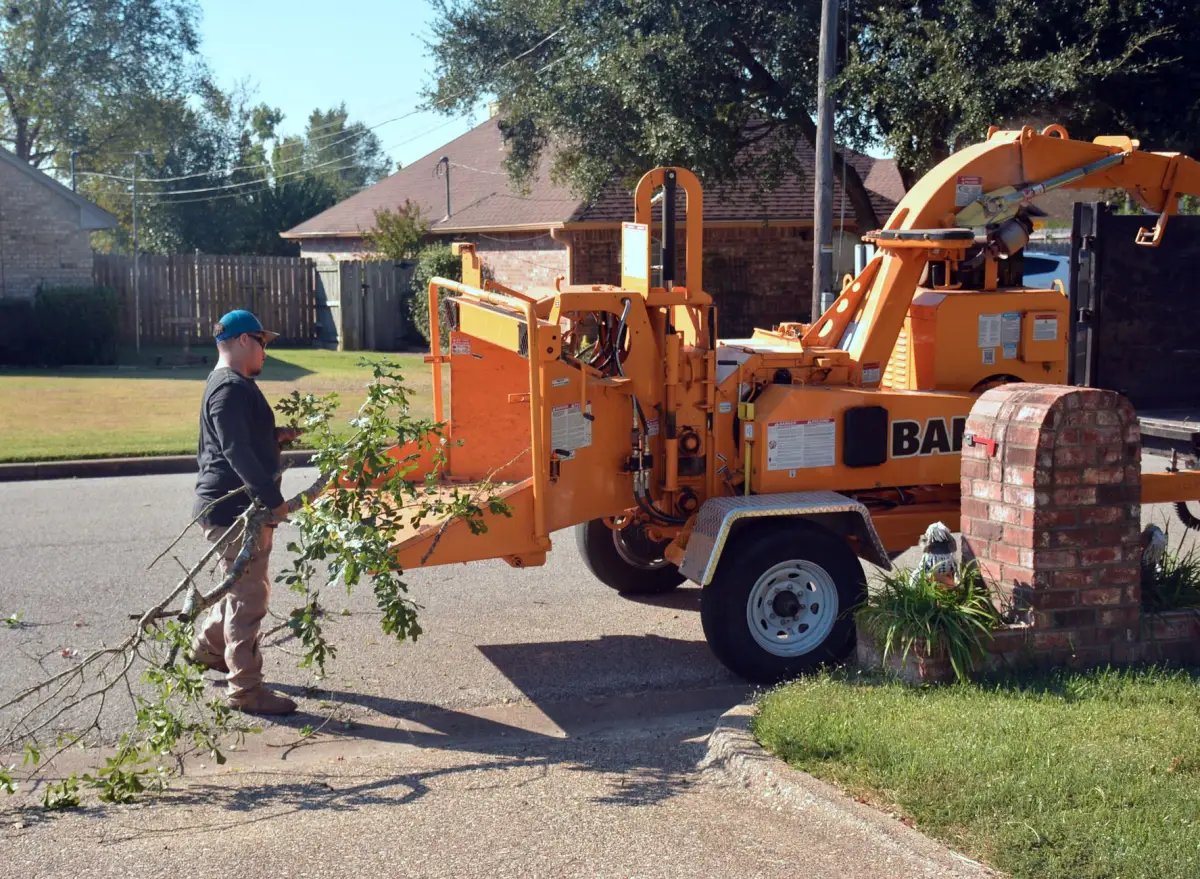
Brush goes through the chipper as it comes out so the site stays workable. Trunk wood is bucked to whatever length was agreed and either stacked as firewood or loaded and hauled — two different prices, worth settling before the work starts. Ash wood is handled with the quarantine in mind: St. Louis County sits inside the state EAB quarantine and hardwood firewood cannot legally leave a quarantined county unless MDA-certified. Then the lawn gets raked out where the crown landed, beds cleared of debris, hard surfaces blown clean, and any ruts from getting equipment in rolled back down. Everything gets photographed and the invoice itemised, because insurers ask for both and a lump-sum figure with no breakdown slows a claim down.
What Does Storm Damage Tree Cleanup Cost in Duluth, MN?
- How many trees are affected, and how many are removals rather than cleanup on trees that are staying
- Total debris volume — a single mature spruce fills a chip truck, and a bad wet snow event fills several
- Whether trunk wood is chipped and hauled or bucked and left stacked on site
- Access after the event, including whether a saturated lawn will take equipment or needs matting
- How much of the work is crown work on standing trees, which has to be climbed or reached from a lift
- Whether ash is involved, since the wood has to stay inside the quarantine area
- Whether it is scheduled cleanup or being asked for as an emergency response, which is priced differently
The single biggest saving available here is calling it what it is. If nothing left on your property can move on its own, this is scheduled work and should be quoted at scheduled rates — describing it as an emergency buys you a premium and no extra benefit. The second is deciding wood disposal deliberately: rounds stacked in the yard cost less than rounds hauled away, and on a big storm job that gap is not small. Get the removals, the crown work and the debris hauling itemised separately, both because it makes the price checkable and because insurers want the breakdown.
What to Look for in a Duluth Storm Cleanup Company
They talk you out of removals
A company that recommends keeping a tree that kept most of its crown is assessing. One that quotes removal on every storm-touched tree in the yard is harvesting the storm.
They finish the torn stubs
Cutting the broken piece off is half the job. Cutting the stub back to the branch collar so the wound seals is the half that decides whether the tree is still there in ten years.
They itemise for the claim
Removals, crown work and debris hauling as separate lines, with photographs. A single lump sum with no breakdown is the thing insurers query.
They look at the trees still standing
Hangers, split unions and lifted root plates are what causes the second call three weeks later. A walk-round that only covers what is lying on the grass is not an assessment.
They are still here next spring
Storm chasing follows weather across state lines and does not come back. A local company can be reached in March when something turns out to have been done badly.
Residential & Commercial Storm Damage Tree Cleanup
Residential
Yard cleanup after wind and wet snow events — fallen trees, broken tops, hangers and the debris across lawns and beds. Most residential storm work is a scheduled day or two once the immediate hazards have been dealt with.
Commercial
Grounds, parking areas and walkways on business and managed property, where debris is a liability and an access problem at the same time. Commercial storm response is covered in more detail on the commercial emergency and storm page.
When Storm Damage Tree Cleanup Isn’t the Right Call
- A tree is still on your house, or a limb is hung up over somewhere people walk. That is not cleanup, it is an active hazard, and it should be called in as emergency tree service instead of scheduled with the debris work.
- Anything is on or near a power line. Minnesota Power owns that, along with CenturyLink and Charter for their own lines. It is handled at no cost to you and no tree service should be cutting near it.
- The tree kept most of its crown, the trunk is undamaged and the root plate has not moved. Storms push people into removing trees that were going to be fine. Clean it up, cut the stubs properly and give it a couple of seasons.
- It is a few small branches on the lawn. A rake, a tarp and an afternoon handles that for nothing.
- It is the boulevard tree, or a tree along the Interstate, Mesaba Avenue or London Road between 26th and 60th Ave E. Those are the city's and MnDOT's respectively.
- Somebody knocked on your door offering to clear it today for cash. Get the company name, an address and a written price first — storm work draws people who will not be here in the spring.
Frequently Asked Questions
- What is the difference between storm cleanup and emergency tree service?
- Whether anything left on the property can still move. Emergency work is an active hazard — a tree on the house, a hanger over the driveway, a cracked trunk holding tension. Storm cleanup is what remains once nothing is under load: fallen trees, broken limbs, debris and damaged trees that need assessing. The distinction is worth making when you call, because emergency response carries a premium for being unplanned, and cleanup does not need one.
- Can a storm-damaged tree be saved?
- Often, and it is worth asking before agreeing to a removal. The practical test used by UMN Extension is how much of the crown survived and whether the trunk and main leaders are intact. A tree that kept most of its crown with no trunk damage and no root plate movement usually recovers well. One that lost more than half its crown, split down a main union, or has heaved ground on one side generally does not. Conifers are less forgiving than hardwoods here, since spruce and balsam do not convincingly replace a lost leader.
- Does homeowners insurance cover storm tree cleanup?
- It varies by policy, and the usual pattern is that cover follows damage to a structure rather than the tree itself. A tree that hits the house or garage is commonly covered; a tree that falls in an empty yard and simply has to be removed frequently is not, or is covered only up to a small debris-removal limit. Photograph everything before work starts, ask for an itemised invoice separating removals, crown work and debris hauling, and call your insurer before the cleanup rather than after.
- Why do conifers break so badly here?
- Weight. Wet lake-effect snow off Superior is far heavier than dry inland snow, and white pine, spruce and balsam hold it in dense sprays of needles rather than shedding it. Limb failure in Duluth is a loading problem before it is a wind problem, which is why crown reduction and thinning — pulling weight in off the ends and letting snow and wind through — is more useful preventative work here than it would be somewhere with drier winters.
- What happens to all the wood and brush?
- Brush goes through a chipper. Trunk wood is bucked to length and either stacked on site as firewood or hauled away, priced differently, so agree which before the crew starts. Ash has a legal constraint attached: St. Louis County is inside the state emerald ash borer quarantine, so hardwood firewood cannot be moved out of the county unless it is MDA-certified. Keeping ash rounds on your own property is fine — hauling them somewhere else is not.
- How soon after a storm should the cleanup happen?
- Hazards immediately, cleanup when it can be scheduled. There is no urgency to hauling brush, and after a widespread event everyone is calling at once, so waiting a week for a proper scheduled visit usually costs less and gets more attention than pushing for same-day work. The exceptions are torn limbs still hanging in crowns and split unions, which get worse with every subsequent wind, and anything blocking access or overhanging a walkway.
Learn More
- UMN Extension — Storm Damage to Landscape Trees — How to judge whether a storm-damaged tree is worth keeping, based on surviving crown and trunk condition, and what a homeowner can safely handle.
- Minnesota DNR — Tree Care and Forest Health — State guidance on tree damage, recovery and the pests that leave trees more likely to fail, including the oak wilt cutting restrictions.
- Minnesota Department of Agriculture — Emerald Ash Borer — The quarantine covering St. Louis County and the restrictions on moving ash wood and hardwood firewood, which apply to storm debris as much as firewood.
Need Storm Damage Tree Cleanup in Duluth, MN?
Tell us what’s going on and get an on-site estimate — no charge for the visit, and no obligation to book the work.
Get My Free Estimate