
Commercial Land Clearing in Duluth, MN — Development, Construction & Large-Site Clearing
Site cleared to the line the plans need, phased to the build schedule, with stormwater permitting and erosion control settled before the first machine moves.
Commercial Land Clearing in Duluth, MN
Duluth Elite Treecare is a local resource for commercial land and lot clearing throughout Duluth, the Twin Ports and the surrounding Northland. We help developers, contractors and property owners connect with experienced professionals for site clearing where the schedule, the permits and the erosion control matter as much as the trees.
Commercial clearing in Duluth is a permitting exercise before it is a machine exercise. Any construction activity disturbing one acre or more requires NPDES/SDS construction stormwater permit coverage from the MPCA under general permit MN R100001, along with a stormwater pollution prevention plan setting out how runoff will be controlled — and coverage is required for sites under an acre too when they form part of a larger common plan of development. Sites operating without it are subject to MPCA enforcement, civil penalties or criminal charges. On top of that sit the state shoreland standards, which prohibit intensive vegetation clearing in shore impact zones, bluff impact zones and on steep slopes, and Duluth's own zoning overlays.
The physical problem is the grade. Duluth's developable ground steps up from the lake on clay with rock close to the surface, and a cleared slope here starts moving in the first hard rain if the root structure comes out all at once and nothing goes back in its place. That drives the sequence more than anything else: clearing gets phased so exposed area is minimised at any given moment, erosion control goes in as ground is opened rather than at the end, and the parts of the site that do not need clearing until month three do not get cleared in month one. A schedule that ignores this produces a stop-work order rather than an early finish.
What’s Included in a Duluth Commercial Land Clearing Quote
- Pre-clearing review of stormwater permitting, shoreland constraints, zoning overlays and grading thresholds
- Clearing limits surveyed and flagged on the ground, with retained trees marked and protected
- Gopher State One Call locates placed before any ground is broken
- Standing timber felled or dismantled, brush cleared, and material sorted for sawlog, chip, firewood and waste
- Stumps ground or root mass excavated according to what is being built on each area
- Erosion and sediment control installed as ground is exposed, and phased so the site is never fully bare


Commercial Land & Lot Clearing in Duluth, MN
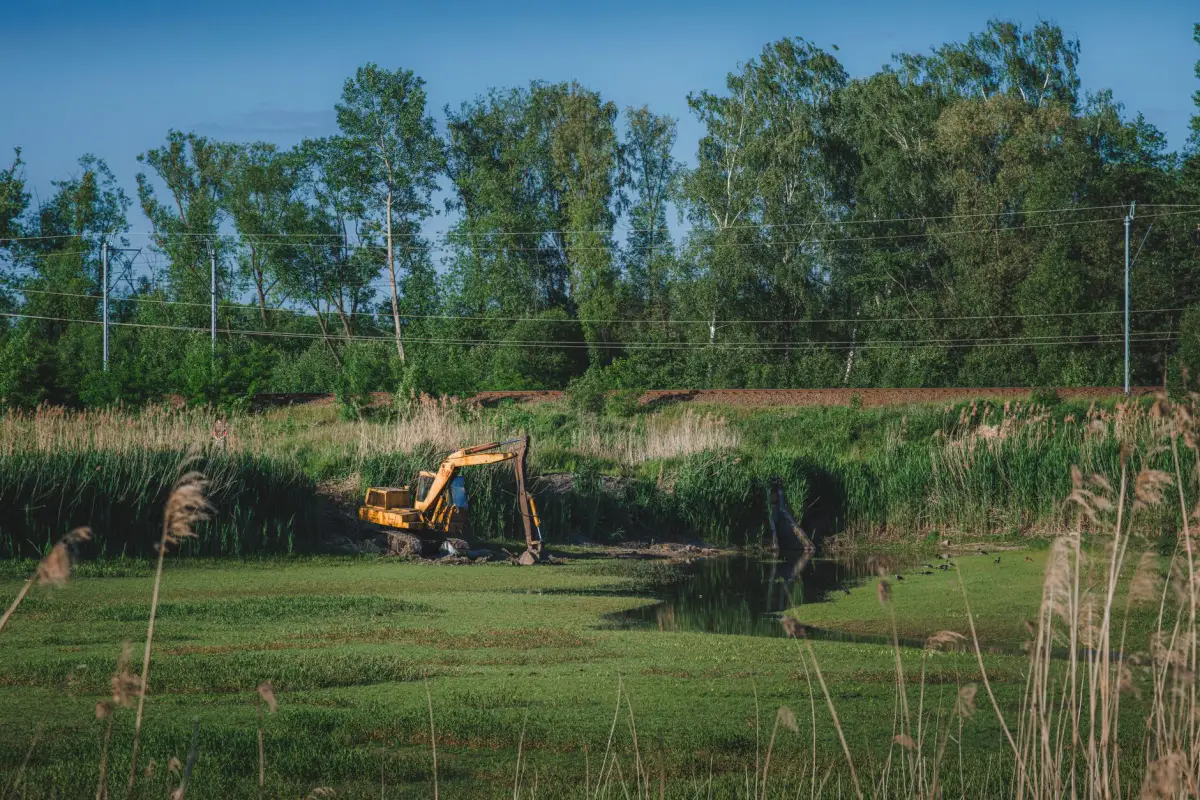
Commercial Site Clearing
Clearing a commercial parcel means clearing to a line somebody drew, which makes accuracy the first requirement rather than volume. The clearing limit gets surveyed and flagged before anything moves, because on commercial ground an over-clear is not a tidy-up problem — it is a permit problem, a replanting obligation, and occasionally a boundary dispute with a neighbouring owner. Trees being retained get identified and physically protected at the drip line, since tracked equipment compacting root zones kills mature trees over the following three or four years, long after anyone connects the two events. The work then proceeds by zone in the order the project actually needs, which is rarely the order that is easiest to clear.
Construction Site Tree Clearing
On an active construction programme, clearing is a trade with a slot rather than a standalone job, and its sequence is dictated by everything that follows. Site access comes first so material and equipment can get in without crossing ground that has to stay intact. Then the building envelope, cleared to the line the plans require, with stumps and root mass excavated rather than ground wherever footings, slab or pavement are going — decaying root wood settles unevenly and nothing structural should bear on it. Laydown and staging areas get cleared next. What does not get cleared is everything else, because exposed ground that is not being worked is exposed ground generating sediment and consuming SWPPP effort for no benefit.
Tree & Brush Clearing
At commercial scale the tree and brush operation is run for material flow rather than tree by tree. Standing timber comes down into ground already cleared, understory is taken alongside rather than afterwards, and everything gets sorted as it falls — sawlog to one stack, firewood to another, chip blown to a stockpile, waste separated — because deciding later means handling everything twice, and on a large site that is measured in days. Two legal constraints shape disposal and they are not negotiable: buckthorn is a Restricted noxious weed in Minnesota and cannot legally be transported, and St. Louis County is inside the state emerald ash borer quarantine, so hardwood cannot leave the county unless it is MDA-certified.
Development Lot Clearing
Multi-lot development brings a permitting wrinkle worth knowing before the first lot is touched: construction stormwater coverage is required even for a parcel disturbing under an acre when it is part of a larger common plan of development or sale. Clearing three half-acre lots in a subdivision is not three sub-acre projects. Beyond that, development clearing benefits most from phasing — clearing lots as they come up for construction rather than stripping the whole site at the outset keeps exposed area down, keeps sediment control manageable, and preserves the mature trees that make finished lots worth more. On Duluth ground it also avoids holding a bare hillside through a spring thaw.
Large-Scale Vegetation & Tree Removal
Large clearing operations are limited by material handling and by ground conditions rather than by cutting capacity. Chip volume from a heavily wooded acre is substantial and stockpiling it needs planned space that is not in the way of the next phase. Ground conditions decide the calendar: frozen winter ground carries equipment that would rut saturated spring clay into a mess that then has to be repaired, so on Duluth sites there is a real argument for clearing in winter that has nothing to do with crew availability. On steep ground, clearing proceeds in stages that leave root structure in place until stabilisation can follow, rather than opening a whole face at once.
Signs You Need Commercial Land Clearing
- A development or construction programme with a wooded or overgrown site and a start date
- A commercial parcel where the building envelope, access route or laydown area needs opening
- Land disturbance approaching or exceeding one acre, which brings construction stormwater permitting into scope
- A site with shoreland, bluff or steep slope constraints that needs the limits established before work is priced
- An existing commercial site closing in with regrowth that is encroaching on usable ground or access
- A parcel being prepared for sale or valuation where the ground condition is currently unknown
How Commercial Land Clearing Works

- 1
Settle permitting and constraints before scoping the work
On commercial ground this comes first because it can change the project rather than just the price. Total land disturbance gets calculated, since one acre or more triggers NPDES/SDS construction stormwater permit coverage under MPCA general permit MN R100001, and a stormwater pollution prevention plan has to exist before work starts — coverage also applies below an acre where the parcel is part of a larger common plan of development or sale, which catches multi-lot subdivisions. Then the site's position relative to water and slope: state shoreland standards prohibit intensive vegetation clearing in shore impact zones, bluff impact zones and on steep slopes, and grading and filling permits trigger at ten cubic yards on steep slopes or within those zones, fifty elsewhere in the shoreland district. Duluth's zoning overlays get checked alongside. Working without coverage exposes the owner to MPCA enforcement and penalties, so this is settled on paper first.
- 2
Survey the clearing limit and protect what stays
The clearing line gets surveyed and flagged physically on the ground rather than described in a scope document, and it gets walked with the owner or the project manager before anything moves. Over-clearing on a commercial site is not a cosmetic error — it is a permit breach, a replanting obligation and potentially a boundary problem. Trees being retained are marked and fenced at the drip line, because the damage that actually kills retained trees on construction sites is root zone compaction from equipment tracking and material storage, which shows up as decline three or four years after handover when nobody links it back. Utility locates go in at this stage under Minnesota Statute Chapter 216D, at least two full business days ahead, and on a long-vacant commercial parcel there is usually more buried than the current owner knows about.
- 3
Clear by phase, in the order the project needs
Access first, so material and machines move without crossing ground that has to stay intact or compacting the root zones of retained trees. Then the building envelope to the surveyed line, then laydown and staging. Everything else stays until the programme needs it, because exposed ground that is not being worked generates sediment and consumes erosion control effort while returning nothing. Standing timber is felled where there is room and dismantled where there is not, dropping into ground already cleared. Material is sorted as it comes down into sawlog, firewood, chip and waste. Buckthorn cannot legally be transported and hardwood cannot leave St. Louis County unless MDA-certified, so disposal routes get established before the piles exist rather than after. On steep ground, clearing runs in stages so a whole face is never open at once.
- 4
Deal with stumps, stabilise, and hand over documented
Stump treatment follows what each area is for. Under footings, slab, pavement or structural fill, the stump and root mass get excavated out entirely, because decaying wood settles unevenly and undermines what sits on it. Under future landscape or open ground, grinding is sufficient and far less disruptive. Grading follows, keeping drainage dispersed rather than concentrated into a single channel down the grade, which on Duluth clay is how a stabilised slope becomes a gully. Erosion and sediment control is installed as ground is exposed rather than saved for the end, and it is maintained through the programme as a SWPPP requires rather than treated as a one-time install. Handover is documented — clearing limits as built, material disposal routes, retained tree protection, and stabilisation measures in place — because that record is what supports permit compliance and what the next contractor inherits.
What Does Commercial Land Clearing Cost in Duluth, MN?
- Total area and, more significantly, the density and size of standing timber across it
- Permitting scope — stormwater coverage, SWPPP preparation, grading permits, and any survey work required
- Whether stumps are ground or root mass is excavated, which differs by an order of magnitude in cost
- Slope and ground conditions, which decide equipment choice, phasing, and how much stabilisation is required
- Material volume and disposal route, including quarantine and noxious weed constraints on what can be hauled
- Erosion and sediment control, which on Duluth's grade is a substantial line item rather than a formality
- Programme constraints — phasing around other trades, access windows, and whether work can be done on frozen ground
The three things that move a commercial clearing budget are rarely the clearing itself. Root mass excavation under a building pad is a different order of work from grinding stumps under future landscape. Hauling material off site costs a multiple of chipping and stockpiling it where it stands. And erosion control on Duluth grade, maintained through the programme as a SWPPP requires, is an ongoing cost rather than a one-time install. All three belong as separate lines. Permitting should be settled before the quote is accepted, not after — a site operating without required stormwater coverage faces MPCA enforcement, and a stop-work order costs more than any clearing line item.
What to Look for in a Duluth Commercial Clearing Contractor
They calculate the disturbance area first
One acre triggers construction stormwater permitting, and so does a smaller parcel inside a larger common plan of development. A contractor who has not asked has not scoped the project.
They survey the clearing limit
Flagged on the ground and walked before anything moves. Over-clearing on commercial land is a permit breach, not a tidy-up.
They protect retained trees at the drip line
Root compaction from tracked equipment kills mature trees three or four years later, well after handover, when nobody connects the two.
They phase to minimise exposed ground
Clearing only what the programme currently needs keeps sediment control manageable and stops a bare hillside sitting through a spring thaw.
They establish disposal routes before the piles exist
Buckthorn cannot be transported and hardwood cannot leave St. Louis County uncertified. Working that out after the material is stacked means handling it twice.
Residential & Commercial Commercial Land Clearing
Residential
Residential lot clearing on a single parcel is smaller in scope and usually falls under the permitting thresholds that govern commercial work. See the residential land clearing page for how that is assessed.
Commercial
Development sites, construction programmes, industrial parcels and multi-lot subdivisions. Work is phased to the build schedule, run against the stormwater permit and SWPPP, and documented for compliance and handover.
When Commercial Land Clearing Isn’t the Right Call
- The site sits in a shore impact zone, a bluff impact zone or on steep slopes and the plan requires intensive clearing. State shoreland standards prohibit that outright, and finding out after mobilisation is considerably more expensive than finding out before.
- There is no stormwater permit coverage and disturbance will reach an acre, or the parcel is part of a larger common plan of development. That has to be in place first — sites without coverage face MPCA enforcement, civil penalties or criminal charges.
- You want the whole parcel stripped because it simplifies the schedule. On Duluth's grade and clay that trades a clearing task for an erosion problem, and it removes the mature trees that make finished lots worth more.
- The clearing limit has not been surveyed. Over-clearing on commercial ground is a permit breach and potentially a boundary dispute, and neither is fixable after the fact.
- It is understory and regrowth with the mature canopy staying. That is brush clearing — smaller equipment, lower cost, and generally outside the permitting thresholds.
- The scope is a handful of trees on a developed commercial site. That is commercial tree removal, priced per tree, without the mobilisation and permitting overhead of a clearing operation.
Frequently Asked Questions
- What permits are needed for commercial land clearing in Duluth?
- Construction activity disturbing one acre or more requires NPDES/SDS construction stormwater permit coverage from the MPCA under general permit MN R100001, together with a stormwater pollution prevention plan. Coverage is also required below an acre when the parcel is part of a larger common plan of development or sale. Separately, state shoreland standards restrict clearing in shore impact zones, bluff impact zones and on steep slopes, and grading and filling permits trigger at ten cubic yards on steep slopes or within those zones and fifty cubic yards elsewhere in the shoreland district. Duluth's zoning overlays apply on top.
- What is a SWPPP and do we need one?
- A stormwater pollution prevention plan setting out how runoff and sediment will be controlled on the site. It is part of applying for construction stormwater permit coverage, so if the project needs the permit it needs the plan. On Duluth ground it is more than paperwork: clay slopes with the root structure removed shed sediment quickly, and the plan drives real decisions about phasing, how much ground is exposed at once, and what stabilisation goes in and when. Sites that lack coverage or fail to meet permit conditions face MPCA enforcement action.
- How should clearing be phased around a construction programme?
- Access first, so material and equipment can move without crossing ground that has to stay intact. Then the building envelope to the surveyed line, then laydown and staging. Everything else waits until the programme needs it. Clearing ground that will not be worked for three months generates sediment and consumes erosion control effort for no return, and on a Duluth site it can mean holding a bare slope through a spring thaw. Phasing also allows winter work on frozen ground, which carries equipment that would otherwise rut saturated clay.
- Do stumps have to be excavated or is grinding enough?
- It depends entirely on what bears on that ground. Under footings, slab, pavement or structural fill the stump and root mass get excavated out, because decaying wood settles unevenly and undermines what sits on it. Under future landscape or open ground, grinding is sufficient, cheaper and much less disruptive. The two differ by an order of magnitude in cost, so a quote that says only "stumps removed" should be pinned down to specific areas before it is accepted.
- What happens to the timber and material from a large site?
- It gets sorted as it comes down — sawlog, firewood, chip and waste — because deciding afterwards means handling everything twice, which on a large parcel costs days. Chipping and stockpiling on site is usually the cheapest route, provided the stockpile is somewhere the next phase does not need. Two constraints govern hauling: buckthorn is a Restricted noxious weed in Minnesota and cannot legally be transported, and St. Louis County is inside the state emerald ash borer quarantine, so hardwood cannot leave the county unless MDA-certified.
- Can trees be retained on a commercial development site?
- Yes, and it is usually worth doing, but retention only works if it is enforced physically. Mature trees left on a site are killed most often by root zone compaction from tracked equipment and material storage, not by the clearing operation — and the decline shows up three or four years after handover when nobody links it back. Retained trees need marking, fencing at the drip line, and a site rule that the protected area is not used for access or storage. Retention that exists only on a drawing does not survive construction.
Learn More
- Minnesota Pollution Control Agency — Construction Stormwater — The NPDES/SDS construction stormwater permit, the one-acre and common-plan-of-development thresholds, and the SWPPP requirement.
- Minnesota DNR — Shoreland Regulations and Administration — Vegetation clearing restrictions in shore and bluff impact zones and on steep slopes, plus the grading and filling permit thresholds.
- City of Duluth — Zoning Regulations — Duluth's shoreland, stormwater and natural resources overlay districts, which apply on top of the state requirements.
Need Commercial Land Clearing in Duluth, MN?
Tell us what’s going on and get an on-site estimate — no charge for the visit, and no obligation to book the work.
Get My Free Estimate