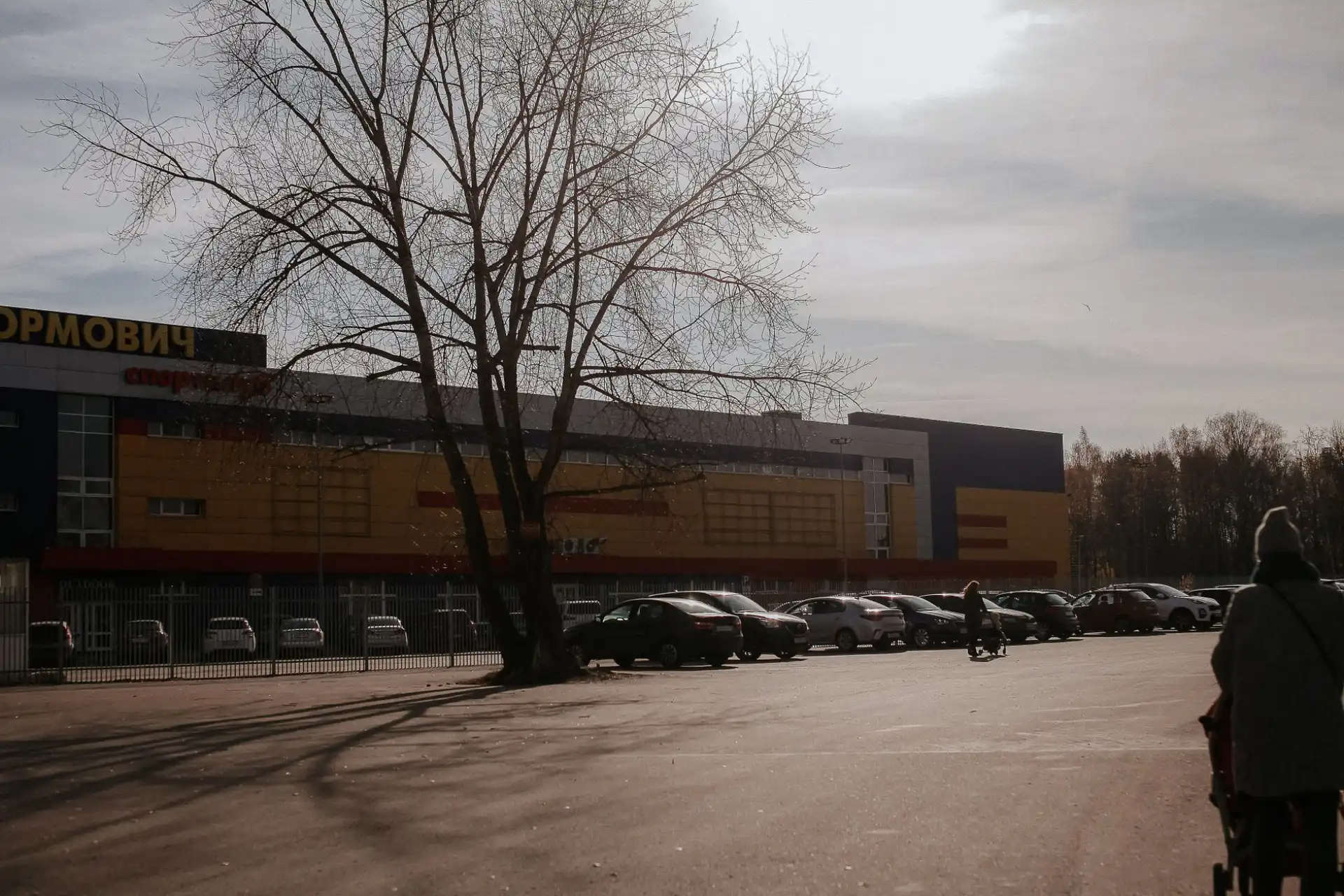
Commercial Tree Removal in Duluth, MN — Business, Retail & Managed Property Specialists
Hazard trees over parking, dead ash across a site, and multi-tree projects phased so the lot stays open. Scoped as a project, not a callout.
Commercial Tree Removal in Duluth, MN
Duluth Elite Treecare is a local resource for commercial tree removal throughout Duluth, the Twin Ports and the surrounding Northland. We help business owners and property managers connect with experienced arborists for removal work on commercial ground, where access, phasing and liability matter as much as the trees.
Commercial removal is a scheduling problem attached to a tree problem. The tree work itself is not fundamentally different from a residential job — the same rigging, the same assessment, the same drop zone arithmetic. What changes is everything around it: a parking lot that cannot lose forty stalls on a Friday, a walkway that has to stay open, a delivery bay that gets used at 6am, and a tenant who needs to be told before the chipper starts. Work on commercial ground gets planned in phases, with a drop zone that moves as sections of the lot are released and returned.
The other difference is who carries the exposure. On a commercial site there is a duty of care to people who did not choose to be there, which makes a hazard tree over a parking stall or an entrance a different category of problem from the same tree in a back yard. That is why commercial removal is usually driven by a documented condition rather than by appearance, and why property managers want the assessment, the scope and the completion in writing. Emerald ash borer has made this routine across Duluth since it was detected here in late 2015 — dead ash on a commercial property is a liability with a known trajectory.
What’s Included in a Duluth Commercial Tree Removal Quote
- Site-wide assessment with findings documented per tree, suitable for a manager or owner to act on
- Phased scheduling around business hours, deliveries, tenants and peak parking
- Traffic and pedestrian management — coned drop zones, spotters, and stalls released as work moves
- Removal of hazard trees, dead ash and oversized trees close to buildings and parked vehicles
- Multi-tree projects staged across a site rather than done as a single shutdown
- Surfaces protected, debris cleared daily, and the site left usable at the end of each working day
Commercial Tree Removal Services in Duluth, MN
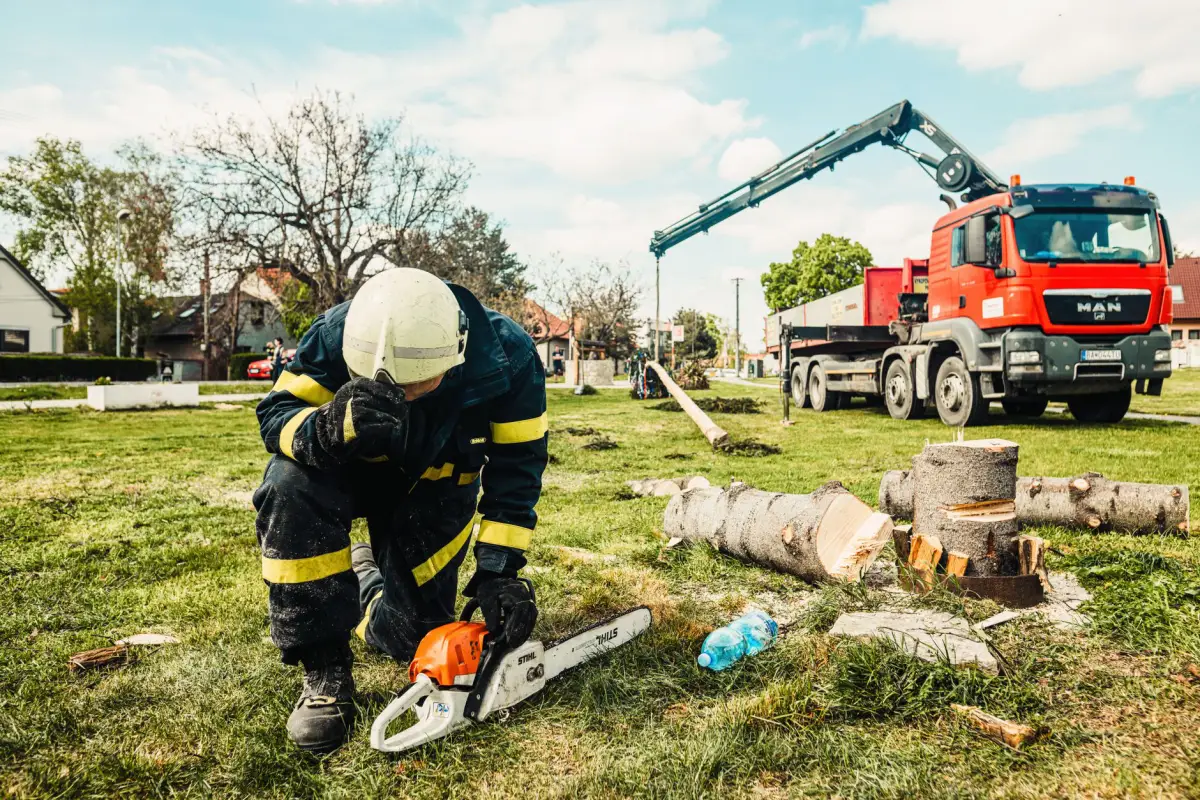
Hazardous Tree Removal
On commercial ground the target under the tree is usually a person who had no say in being there, which raises the stakes on a defect that would be tolerable in a back yard. The assessment therefore weights occupancy heavily: a decayed stem over an employee parking row that fills every weekday morning is a more urgent finding than a worse defect over a storage yard nobody walks through. Findings get documented per tree with the defect named and the target described, because that record is what a manager needs in order to authorise spending and what an owner wants on file afterwards. Work is then sequenced by risk rather than by convenience or by which tree is easiest to reach.
Dead & Dying Tree Removal
Commercial sites across Duluth are carrying a lot of dead and declining ash, and the reason is documented — emerald ash borer was detected here in late 2015, and older commercial landscaping leaned heavily on ash for exactly the reasons it was planted everywhere else. A dead ash on a business property compounds two problems at once: it gets more brittle and more dangerous to climb every season it stands, and it is visibly dead in a place where the public sees it. Removal on this ground is normally planned as a set rather than a single tree, because sites that planted ash planted several, and doing them in one mobilisation costs meaningfully less than doing them one at a time as each becomes obvious.
Large Tree Removal
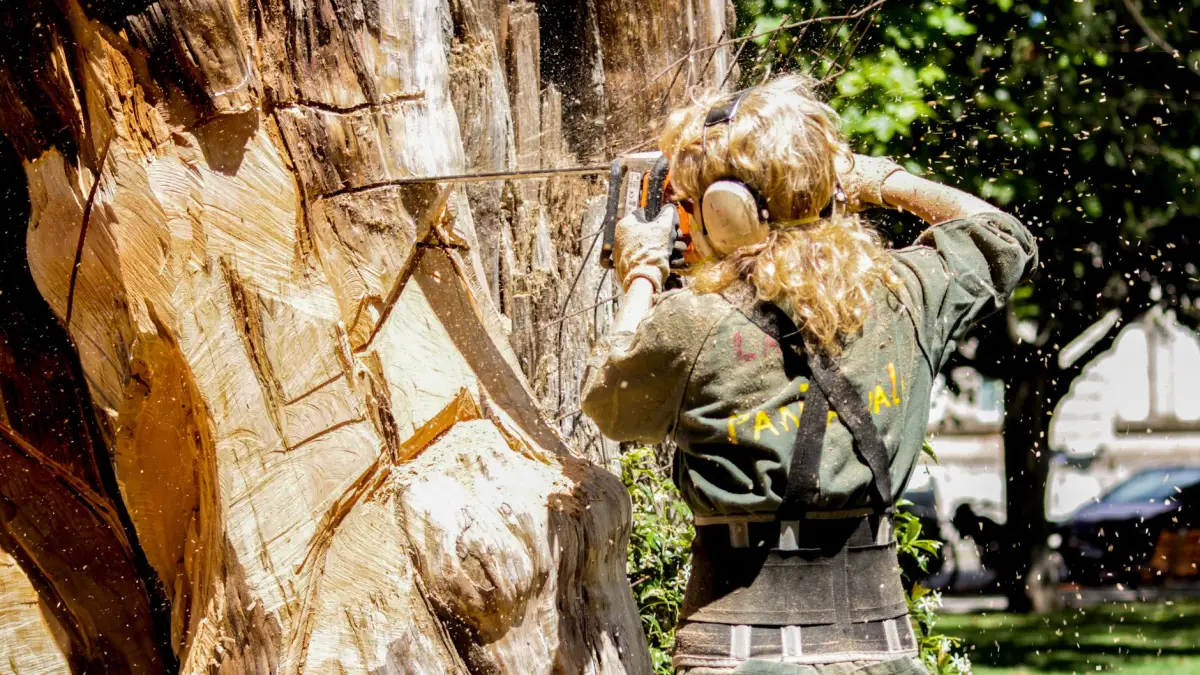
Large trees on commercial sites are frequently the oldest thing there, planted long before the current building, and they tend to be in the worst places — tight to a foundation, over an entrance canopy, or in an island surrounded by asphalt on all four sides. The technique is the same sectional dismantle used anywhere else, but the constraints tighten: a drop zone on a commercial lot means closed stalls, and closed stalls have a cost per hour that a homeowner's lawn does not. That pushes toward equipment. A lift or crane that shortens a three-day climbing job to one day is often cheaper overall on commercial ground once the lost parking is priced in, which is the opposite of how it works residentially.
Multi-Tree Removal Projects
Ten or thirty trees across a site is a project rather than a series of jobs, and the savings live in the sequencing. Trees get grouped by zone so the site loses one area at a time and everything in that area comes out in the same visit — chipper positioned once, drop zone established once, traffic management set up once. Priority is set by risk first and by disruption second, so the hazard over the main entrance moves ahead of the dead tree at the back fence regardless of what is convenient. Where the work spans a budget year, the assessment supports splitting it into phases with a documented reason for the order rather than an arbitrary half.
Tree Removal Around Commercial Buildings & Parking Lots
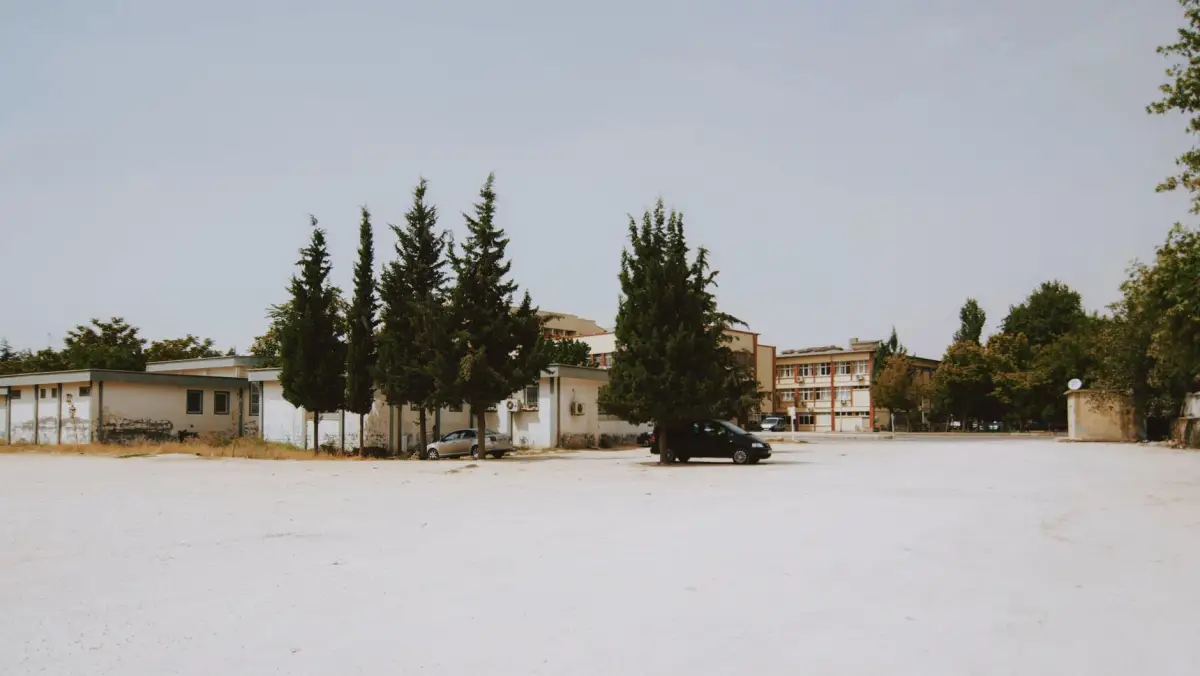
Parking lot trees are the hardest commercial removals and the most common. The tree sits in an island barely wider than the root flare, surrounded by asphalt, with light standards, cameras, drainage and often shallow utilities in the immediate area — and cars parked on three sides that will still be there when work starts unless somebody has arranged otherwise. Every piece comes down under rigging because there is nowhere to drop anything, surfaces get protected because a dropped round cracks asphalt and a grinder tracks it, and stalls are released back progressively rather than held for the whole job. Around buildings, the same logic applies to entrance canopies, glazing and rooftop equipment.
Signs You Need Commercial Tree Removal
- A tree with a visible defect standing over parking stalls, a walkway or an entrance the public uses
- Dead or declining ash anywhere on the site, particularly where it was planted in groups
- Roots lifting sidewalk panels or asphalt and creating a trip hazard across a pedestrian route
- Limbs over a building, entrance canopy, rooftop unit or signage that keep needing attention
- A tenant, insurer or inspection has flagged tree condition on the property
- Trees planted too close to the building when the site was developed and now oversized for the space
How Commercial Tree Removal Works
- 1
Assess the site and document it per tree
A commercial assessment covers the whole property rather than the one tree somebody complained about, because a manager authorising a mobilisation should know what else is on the site. Each tree gets a condition note, the defect named where there is one, and the target described — which stalls, which walkway, which entrance, and how heavily used. Occupancy is weighted deliberately: a modest defect over a row that fills every weekday morning outranks a worse defect over ground nobody crosses. Site logistics get recorded at the same time, since they shape the price as much as the trees do: where a chipper can sit, which stalls have to close for each drop zone, delivery windows, tenant hours, and where the surfaces are that need protecting. The output is a document that supports a decision, not a verbal impression.
- 2
Agree the phasing and the notifications
Scheduling is where commercial jobs succeed or fail. The site gets divided into work zones so only one area is out of use at a time, and the sequence is set by risk first, disruption second. Then the calendar: retail avoids weekends and the run-up to holidays, offices work best early or on a Friday, and anywhere with deliveries has a bay that cannot be blocked at specific hours. Notifications get agreed rather than assumed — tenants, staff, and anyone whose vehicle needs to move, with enough notice that the lot is actually clear on the morning. On a Duluth site there is a seasonal layer to this as well: winter work has the advantage of frozen ground that carries equipment without rutting, and the disadvantage of snow storage occupying the space a drop zone needs.
- 3
Set up, control the area, and remove in sections
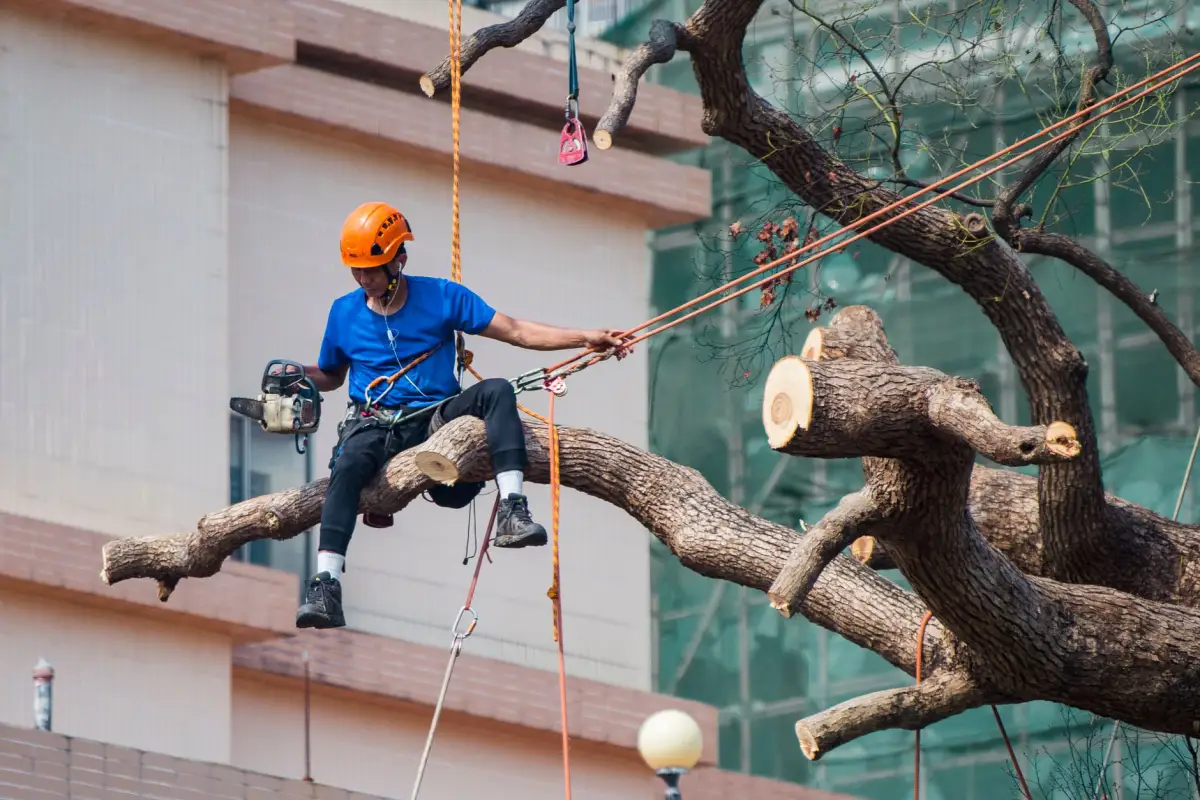
Each work zone gets established before cutting starts: stalls coned and confirmed empty, pedestrian routes rerouted rather than merely signed, spotters where vehicles and people will come round a corner into the area, and surface protection down where equipment tracks or heavy pieces will land. Removal itself is a sectional dismantle almost every time, because commercial trees rarely have a drop zone — limbs tied and lowered on a rigging line, then the spar blocked down in rounds. Where the tree is dead ash the method changes, since brittle wood rules out climbing it and the work goes to a lift. Equipment is worth more here than on a residential job: a lift or crane that turns three days into one saves parking revenue and disruption that usually exceeds the equipment cost.
- 4
Clear daily, release the area, and close out in writing
Commercial sites get cleared at the end of every working day rather than at the end of the job, because a lot half full of brush is not a lot anyone can use. Brush is chipped as it comes down, rounds are removed rather than stacked, and hard surfaces get blown clean each evening so the site opens normally the next morning. Stalls and walkways are released back as each zone finishes rather than held for the duration. Where ash is involved the wood's destination is constrained: St. Louis County sits inside the state emerald ash borer quarantine, so hardwood cannot leave the county unless MDA-certified. Close-out is a document — what was removed, what was found and left, what is recommended next and when — because that record is what the manager files and what the next assessment starts from.
What Does Commercial Tree Removal Cost in Duluth, MN?
- Number of trees and whether they can be grouped into zones done in a single mobilisation
- Access for a lift or crane, which often costs less overall than the parking closure a longer climbing job requires
- How much of the site has to be closed at once, and for how long, including lost parking
- Whether work must be staged outside business hours, early mornings or around delivery windows
- Proximity to buildings, canopies, glazing, light standards, cameras and rooftop equipment
- Surface protection on asphalt and pavers, and reinstatement of anything damaged in the process
- Whether dead ash is involved, which rules out climbing and changes the method and the wood's destination
The cost that goes unaccounted for on commercial jobs is the site being out of use. A cheaper quote that takes three days of closed parking is frequently more expensive than a higher one that brings in a lift and finishes in a day, and that comparison is worth making explicitly rather than reading the two numbers side by side. Ask for the phasing in the quote — how many stalls, for how long, and on which days — because that is the part that actually lands on the business.
What to Look for in a Duluth Commercial Tree Service
They document findings per tree
A manager needs something to authorise spending against and file afterwards. A verbal impression of the site is not that.
They quote the disruption, not just the work
How many stalls, how many days, which hours. The closure is often the larger cost to the business and it belongs in the comparison.
They phase by risk, not convenience
The hazard over the main entrance goes first even when the tree at the back fence is easier to reach. A schedule built around access is built around the wrong thing.
They clear the site every evening
A lot half full of brush is a lot nobody can use. Daily clearance is a scoping decision, and it should be stated rather than hoped for.
They handle notifications properly
Tenants told, vehicles moved, walkways rerouted rather than signed. The jobs that go badly on commercial ground usually go badly here, not in the tree.
Residential & Commercial Commercial Tree Removal
Residential
Residential removal on a single property is scoped differently — one to three trees, a lawn drop zone, and no parking to lose. See the residential tree removal page for how that work is priced and planned.
Commercial
Retail and office sites, industrial yards, institutional grounds and rental property. Work is phased around occupancy and documented per tree so owners and managers have a record of what was found and what was done.
When Commercial Tree Removal Isn’t the Right Call
- The tree is on the city boulevard fronting your property. Boulevard trees are city property under City Code Section 35-28(a)(2), and businesses are no more permitted to remove them than homeowners are. Report it through the city instead.
- It is along the Interstate, Mesaba Avenue, or London Road between 26th and 60th Ave E. MnDOT manages the trees on those corridors.
- Anything is in contact with a power line. That belongs to the utility that owns it — Minnesota Power, CenturyLink or Charter — and line clearance is normally done at no cost.
- It is a single small tree on a site with easy access and no parking impact. That is an ordinary removal and does not need commercial scoping or the price that comes with it.
- The trees are sound and the concern is appearance or leaf litter. Removing a healthy mature tree from a commercial site is a permanent answer to a seasonal maintenance question, and it usually reduces the property's value along with its shade.
- You need it done today with no notice to tenants. Commercial removal depends on a lot actually being empty when the crew arrives, and that takes lead time rather than urgency.
Frequently Asked Questions
- How is commercial tree removal priced differently?
- The tree work is priced much as it would be anywhere, and then site logistics are added — phased scheduling, traffic and pedestrian management, surface protection, out-of-hours working, and daily clearance so the site opens normally each morning. The variable that surprises people is that equipment often makes a commercial job cheaper rather than dearer: a lift or crane that finishes in one day instead of three saves more in parking closure and disruption than it adds in machine cost. Ask for the closure to be quantified in the quote alongside the price.
- Can the work be done outside business hours?
- Usually, and on retail and hospitality sites it is often the only workable answer. Early mornings before opening, evenings, and quieter weekdays all get used. It is worth raising at the assessment stage rather than after a quote, because out-of-hours working changes the price and, on some sites, the method — noise restrictions and lighting both matter if work is happening outside daylight, which in a Duluth winter narrows the window considerably.
- Do you handle the parking lot closure and pedestrian routing?
- That should be part of the scope rather than left to the property. Stalls get coned and confirmed empty before work starts, drop zones are controlled with spotters where vehicles or people can come round a corner into them, and pedestrian routes are rerouted rather than just signed. What the site has to supply is notice — tenants and staff told in time that vehicles are actually moved on the morning, which is the single most common cause of a lost day.
- We have a lot of dead ash across the property. Should it come out at once?
- Usually yes, or at least in grouped phases, because mobilising once for ten trees costs substantially less than ten separate visits as each becomes obvious. Emerald ash borer was detected in Duluth in late 2015 and sites that planted ash generally planted several, so the trajectory is predictable rather than a surprise. The other argument for acting early is method: a dead ash cannot be safely climbed and has to be taken from a lift, so the same tree costs more the longer it stands.
- Will you provide documentation for our records?
- Findings per tree with the defect and the target described, and a close-out record of what was removed, what was found and left, and what is recommended next. That is what a manager needs to authorise the spend and what an owner wants on file. It also makes the next assessment cheaper, since it starts from a known baseline rather than from scratch.
- What happens to the wood and debris on a commercial site?
- It leaves. Brush is chipped as work proceeds and rounds are removed rather than stacked, with hard surfaces blown clean at the end of each working day so the site opens normally. The one constraint is ash: St. Louis County sits inside the state emerald ash borer quarantine, so hardwood cannot be moved out of the county unless it has been MDA-certified, which determines where the material can go rather than whether it is taken away.
Learn More
- City of Duluth — Emerald Ash Borer — Detection in Duluth in late 2015 and the city's management approach, useful context for planning ash removal across a commercial property.
- Minnesota Department of Agriculture — Emerald Ash Borer — The quarantine covering St. Louis County and the compliance rules governing where ash material from a site can legally be taken.
- City of Duluth — Urban Forestry FAQs — Boulevard tree rules that apply to commercial frontages, and confirmation that utility line clearance belongs to the utility owner.
Need Commercial Tree Removal in Duluth, MN?
Tell us what’s going on and get an on-site estimate — no charge for the visit, and no obligation to book the work.
Get My Free Estimate