Emergency Tree Service in Duluth, MN — Residential & Commercial Hazard Response
A tree on the house, a limb hung up over the drive, a trunk blocking the only way out. The hazard gets made safe first — the tidy-up comes after.
Emergency Tree Service in Duluth, MN
Duluth Elite Treecare is a local resource for emergency tree service throughout Duluth, the Twin Ports and the surrounding Northland. We help homeowners reach experienced arborists quickly when a tree has become an active hazard rather than a job that can wait for a scheduled visit.
An emergency is not the same as a mess. What makes a tree situation urgent is stored energy — a trunk bent over a roof still holding its own weight, a limb hung up in the crown waiting for one gust, a root plate half out of the ground with the tree leaning on a power drop. Those get dealt with before anything gets cleaned up, and they get dealt with in a particular order, because the failure mode with storm work is a second failure while somebody is standing underneath the first one.
Two situations should never wait for a tree service. If a tree or limb is touching a power line or a service drop, that is a utility call — Minnesota Power owns that problem and no arborist should be putting a saw near an energised conductor. If the house is structurally compromised or anyone is hurt, that is 911 first. Everything else is a matter of getting somebody competent on site to look at the load path. If the danger has already passed and what is left is debris in the yard, that is storm cleanup rather than an emergency, and it is worth saying so when you call — it usually gets you a better price and a scheduled slot.
What’s Included in a Duluth Emergency Tree Service Quote
- Assessment of what is holding what, before any cut is made
- Making the immediate hazard safe — releasing loaded limbs, removing hangers, stabilising or taking down a compromised tree
- Removing trees and limbs off houses, garages, vehicles, fences and driveways
- Clearing a blocked driveway or access route so you can get in and out
- Coordination with the utility where a line or service drop is involved, before work starts
- Photographs of the damage as found, which insurers routinely ask for
Emergency Tree Services in Duluth, MN
Emergency Tree Removal
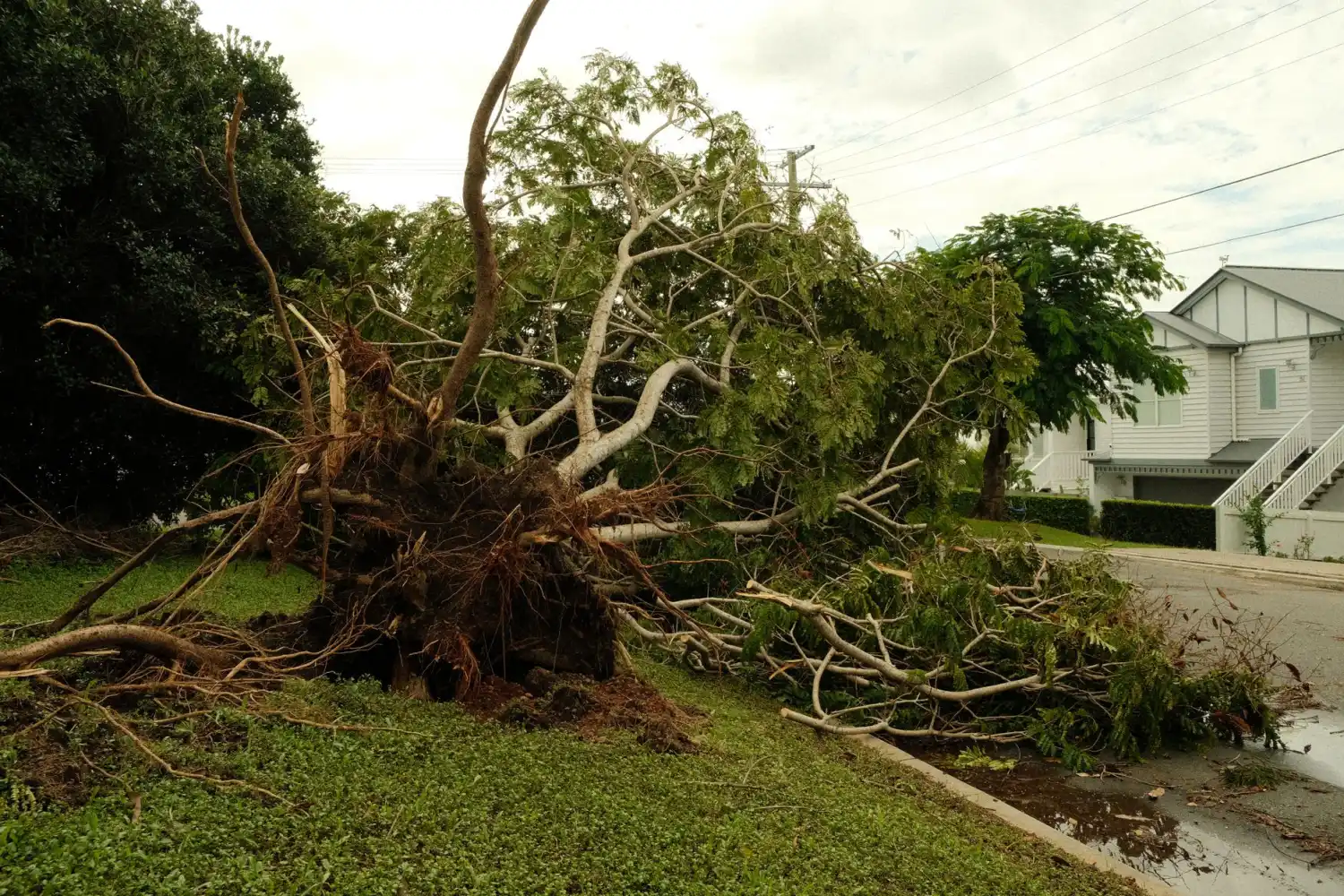
This is a removal done under load, which makes it a different job from a scheduled one. A tree that has cracked at the base, lost a major stem, or lifted its root plate is holding tension in places it was never designed to hold it, and cutting in the wrong order releases that tension somewhere unpredictable. The work starts by reading which parts are in compression and which are in tension, then relieving the load in stages — often roping the stem before any cut, sometimes pulling it with a line from a safe angle rather than climbing it at all. Speed matters, but a tree that has already failed once is exactly the tree not to rush.
Fallen Tree Removal
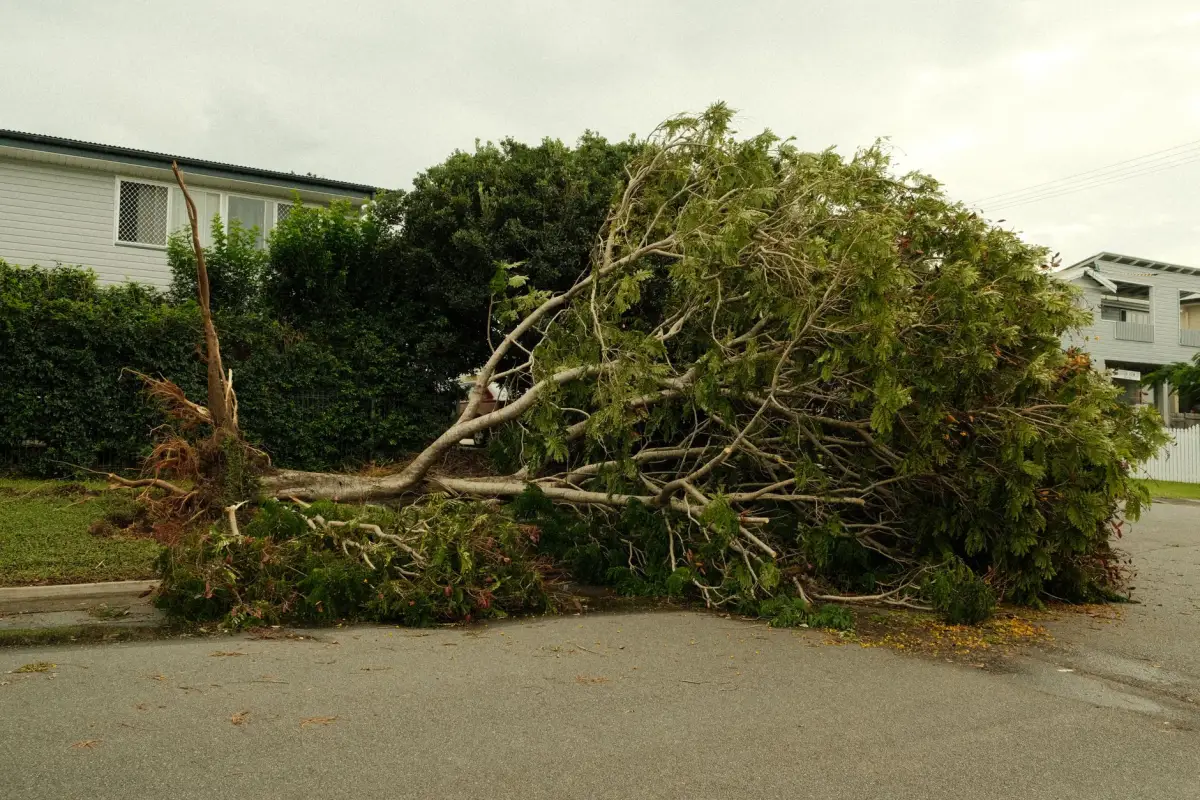
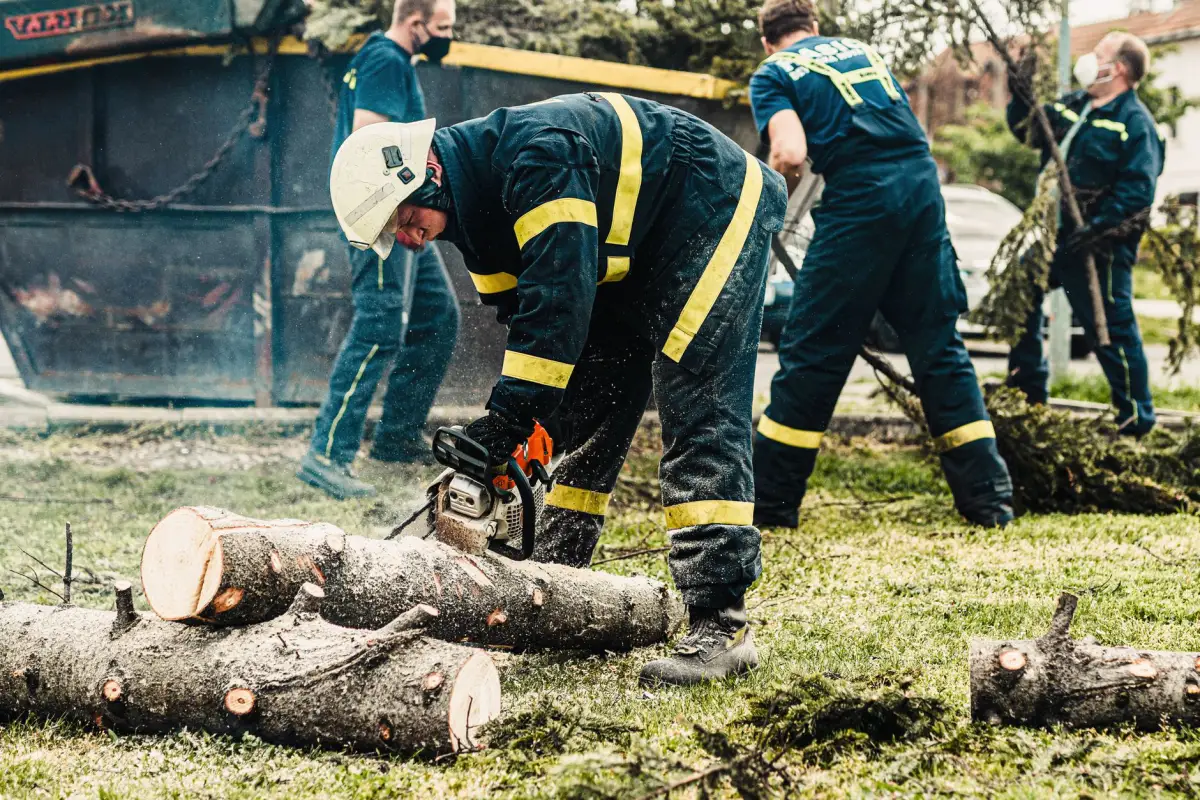
A tree already on the ground is safer than one still standing damaged, but it is not harmless. A trunk lying across a slope is holding itself up on branches that will spring when they are cut, and a butt still attached to a partly lifted root plate can rotate back into the hole with real force once the top is relieved. Cuts get made from the compression side and finished from the tension side, working the tree apart in a sequence rather than starting at the convenient end. On Duluth's grade this comes up constantly — a spruce down across a sloped Woodland yard is under very different loading than the same tree on flat ground.
Dangerous & Hanging Limb Removal
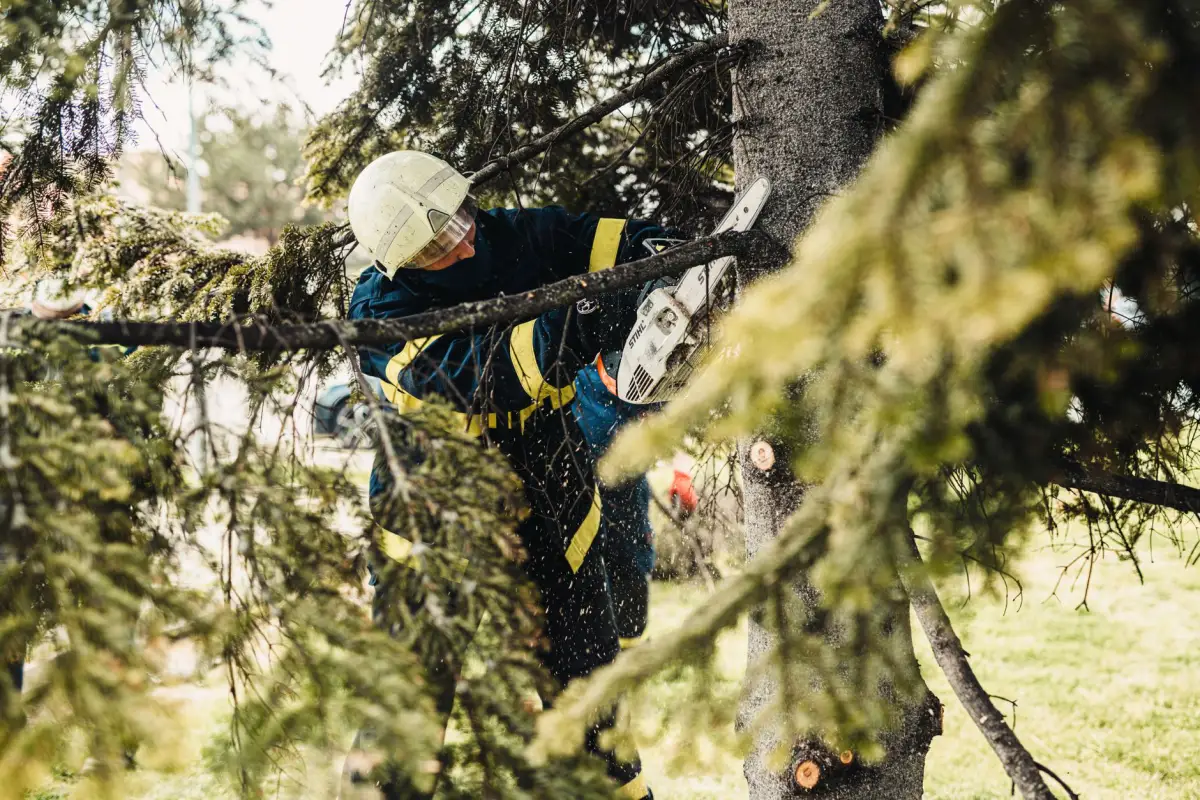
A hanger is a broken limb still lodged in the crown, and it is the classic overnight hazard: nothing happens for two days, then the wind shifts. They come out from above or from a lift where the ground allows, never by standing underneath and cutting whatever is holding it. Where a limb is barber-chaired or split down into the union, the split has to be secured before the piece is severed, because the remaining fibres tear and swing. Ash makes this worse. A dead ash that has been standing since emerald ash borer got into it has brittle unions throughout, so a single failure often means several more waiting above it.
Trees Fallen on Homes & Structures
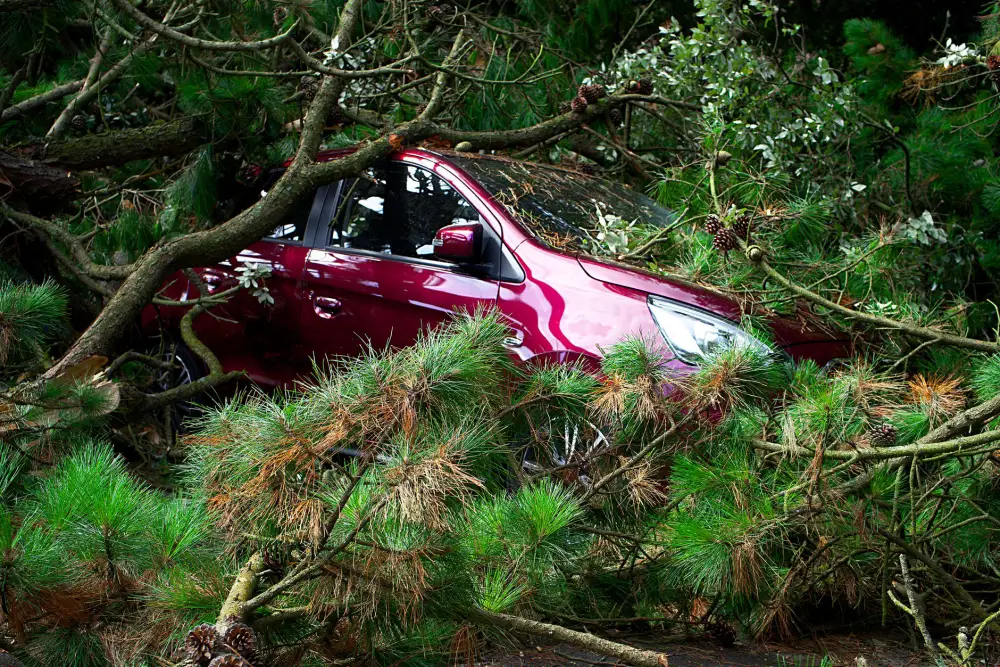
When a tree is on a roof, the tree is often the only thing keeping the roof from opening further, so it does not simply get dragged off. The weight gets taken in pieces, from the top and the ends inward, each piece rigged so the load on the structure reduces rather than shifts. Crane or lift work goes in where the grade and access allow, which on the hillside frequently they do not. Photographing everything as found matters here, because insurers want to see the damage before it was disturbed. If the structure looks unsound or there is any question about occupants, that is an emergency services call before it is a tree call.
Emergency Tree Hazard Cleanup
The emergency portion ends when nothing left on the property is going to move on its own. That usually means the tree down, hangers out, split limbs removed, the drive open and anything overhanging a walkway or a play area taken care of. It does not usually mean the yard is tidy. Full debris removal, chipping, stump work and dealing with the trees that merely look rough afterwards is a scheduled job, and separating the two keeps the urgent call focused and the bill honest. If nothing on your property is currently capable of falling, what you have is cleanup rather than an emergency.
Signs You Need Emergency Tree Service
- A tree or large limb is resting on the house, garage, deck or a vehicle
- A broken limb is hung up in the crown and has not come down yet
- The trunk has a fresh crack, or the ground on one side has heaved and the root plate is lifting
- A tree is leaning noticeably further than it was yesterday, particularly after a thaw or heavy rain
- A fallen tree is blocking the driveway or the only access to the property
- A tree has split at a co-dominant union and one stem is being held up only by the other
How Emergency Tree Service Works
- 1
Triage on the phone before anyone drives out
The first job is sorting genuine emergencies from things that read as one. Is anything touching a power line or a service drop — if so, that is a Minnesota Power call and no saw goes near it until the utility says so. Is the structure sound and is everyone out. Is the hazard still capable of moving, or has everything already come down. Is access blocked, and can a truck reach the property at all, which matters after a widespread wind event when roads through Lakeside and along Skyline Parkway can be closed by other people's trees. That conversation decides whether this is a drop-everything response, a same-day visit, or a scheduled cleanup job — and being told plainly that yours is the third one is more useful than being told what you want to hear.
- 2
Read the load path on arrival
Before any cut, the tree gets read for where the forces are. Which parts are in compression, which are in tension, what is holding what up, and what moves if a given piece is removed. A trunk across a slope, a stem hung in a neighbouring tree, a limb split into a union but still attached, a root plate half lifted with the butt ready to rotate back down — each of these has a specific order of operations and getting it wrong is how storm work injures people. Secondary hazards get identified in the same pass: other cracked limbs overhead, a second tree destabilised by the first, saturated ground that will not hold a lift. Where the tree is dead ash, the assumption changes to nothing being trustworthy, because brittle unions fail without warning.
- 3
Relieve the load and make it safe
The immediate hazard gets neutralised in stages rather than in one cut. Loaded limbs are roped before they are severed so the release is controlled. Hangers come out from above or from a lift, never from underneath. A tree on a roof is dismantled from the top and the ends inward so weight comes off the structure progressively rather than shifting onto a different part of it. Where a stem is under bending tension, cuts are made on the compression face first and finished on the tension face so the fibres part rather than tear. Sometimes the safest approach is not to climb at all — a line pulled from a distance, or a lift, or waiting for equipment that can reach it. A tree that has already failed once has earned that caution.
- 4
Open the access, document it, and schedule the rest
Once nothing on the property can move on its own, the priority is function: driveway open, walkways clear, doors usable, nothing overhanging where people go. The damage gets photographed as found and as cleared, because insurers routinely ask for both and the evidence disappears the moment the work starts. Then the honest separation — what remains is debris, and debris is a scheduled job rather than emergency work. Brush, rounds, ruts, the stump and any trees that came through looking rough get quoted as ordinary storm cleanup, at ordinary prices, on a normal visit. Rolling all of that into the emergency call is how a reasonable response turns into an unreasonable invoice.
What Does Emergency Tree Service Cost in Duluth, MN?
- Whether the response is immediate or can be scheduled for the next working day
- How much of the tree is under load, and how much has to be rigged rather than cut and dropped
- Whether a structure is involved, since weight has to come off progressively rather than at once
- Access after the event — a blocked road or a saturated slope can rule out the lift that would have made it quick
- Whether a crane or lift is needed to reach a tree on a roof safely
- How much secondary hazard is found on arrival, such as other cracked limbs or a destabilised neighbouring tree
- Whether debris removal is included now or quoted separately as scheduled cleanup
Emergency work costs more than scheduled work, and it should — it is unplanned, it displaces other jobs, and it is more dangerous. What it should not be is open-ended. Ask for the scope of the emergency portion specifically: making the hazard safe and opening access, with debris removal quoted separately as ordinary cleanup. Storms also bring people who are not from here. If a truck pulls into your driveway the morning after a windstorm with a chainsaw and no name on the door, that isn't luck. Get the company name, get the price in writing before work starts, and do not pay in cash up front.
What to Look for in a Duluth Emergency Tree Service
They triage honestly on the phone
Being told your situation is cleanup rather than an emergency saves you the premium. A company that calls everything urgent is pricing, not assessing.
They send you to the utility when they should
Anything on a power line belongs to Minnesota Power. An outfit willing to cut near an energised drop is a hazard in its own right.
They separate the emergency from the cleanup
Making the hazard safe is one price. Hauling the brush away next week is another. Rolling the second into the first at emergency rates is the most common way storm bills get inflated.
They photograph the damage as found
Insurers ask for it, and the evidence is gone the moment the first cut is made. A company that does this without being asked has handled claims before.
They have a name on the truck
Storm chasing is a real trade and it follows weather across state lines. A local company is still reachable in March when something turns out to have been done badly.
Residential & Commercial Emergency Tree Service
Residential
Trees on houses, garages and vehicles, hangers over yards and drives, and blocked access after a wind or wet snow event. Most residential emergency work is about getting one specific hazard neutralised and the driveway open.
Commercial
Blocked entrances, trees down across parking areas, and hazards over walkways where a business cannot open until it is cleared. Commercial urgency is usually about liability and access — see the commercial emergency and storm page for how that work is staged.
When Emergency Tree Service Isn’t the Right Call
- Anything is touching a power line or a service drop. That is Minnesota Power's, not a tree service's, and no arborist should be putting a saw near an energised conductor. Call the utility and stay well clear of the area.
- Anyone is injured or the building looks structurally unsound. Call 911 first. The tree work happens after the people part is handled.
- The tree has already come down, nothing left is capable of moving, and what remains is a mess in the yard. That is storm cleanup, and calling it an emergency costs you the premium for no benefit. Ask for a scheduled visit instead.
- It is the boulevard tree between the sidewalk and the street. Those belong to the city — report it through the Resident Problem Reporter rather than hiring the work out.
- It is on the Interstate, Mesaba Avenue, or London Road between 26th and 60th Ave E. MnDOT manages the trees along those corridors.
- A small branch came down and the tree is otherwise sound. That is a scheduled trim at worst, and often it is a rake.
Frequently Asked Questions
- What counts as a tree emergency?
- Something on your property is still capable of moving and there is a target underneath it. A tree resting on the house, a limb hung up in the crown, a fresh crack in a trunk, a lifting root plate, a split union with one stem holding up the other, or a fallen tree blocking your only way out. If everything that was going to fall has already fallen and nothing left is under load, it is not an emergency — it is cleanup, and it should be scheduled and priced as such.
- A tree is on the power line. Who do I call?
- The utility that owns the line, not a tree service. In Duluth that is Minnesota Power for electricity, with CenturyLink and Charter owning their own lines. The city is explicit that it does not do line clearance and that this belongs to the utility owner. Line work is normally done at no cost to you. Stay well back — a downed conductor can energise the ground around it — and do not let anyone put a saw near it first.
- Is emergency tree service available at night or on weekends?
- Availability depends on the crew and on how many other calls came in from the same storm, so the honest answer is to call and ask rather than to assume a window. After a widespread wind or wet snow event, everyone in the Twin Ports is calling at once and genuine life-safety and structure situations get triaged to the front. Describing the situation accurately when you call is what gets you correctly prioritised.
- Will my insurance cover an emergency tree removal?
- It depends on the policy and, generally, on whether the tree hit something covered. Homeowner policies commonly respond when a tree damages a structure, and commonly do not when a tree simply falls in the yard and has to be removed. Photograph the damage as found before any cutting starts, keep the itemised invoice, and call your insurer early — several want to be notified before work beyond making the site safe is carried out.
- Why is emergency work more expensive than a scheduled removal?
- It is unplanned, it displaces scheduled jobs, and it is genuinely more dangerous — a tree that has already failed is holding tension in places nothing was designed for. What should not be inflated is the scope. Making the hazard safe and opening access is the emergency; hauling brush, grinding the stump and tidying the yard is normal work at normal rates. Ask for those to be quoted separately.
- Should I try to cut it myself in the meantime?
- No, and storm-damaged trees are the specific case where that goes wrong. A trunk lying across a slope, a limb bent under tension, a butt attached to a half-lifted root plate — each is storing energy that releases when the wrong cut is made, often sideways and fast. UMN Extension's own advice on storm-damaged trees is to consult a professional for anything beyond small branches. If something must be done immediately, it is moving people and vehicles away from underneath it.
Learn More
- UMN Extension — Storm Damage to Landscape Trees — What can be safely handled by a homeowner after a storm, what needs a professional, and how to judge whether a damaged tree is worth saving.
- City of Duluth — Urban Forestry FAQs — Who to contact about a dangerous boulevard tree, and confirmation that utility line clearance belongs to the utility owner rather than the city.
- Minnesota DNR — Tree Care and Forest Health — State guidance on assessing tree damage and health, including the pests and diseases that leave Duluth trees more likely to fail in a storm.
Need Emergency Tree Service in Duluth, MN?
Tell us what’s going on and get an on-site estimate — no charge for the visit, and no obligation to book the work.
Get My Free Estimate