Commercial Emergency Tree Service in Duluth, MN — Storm Response for Business & Managed Property
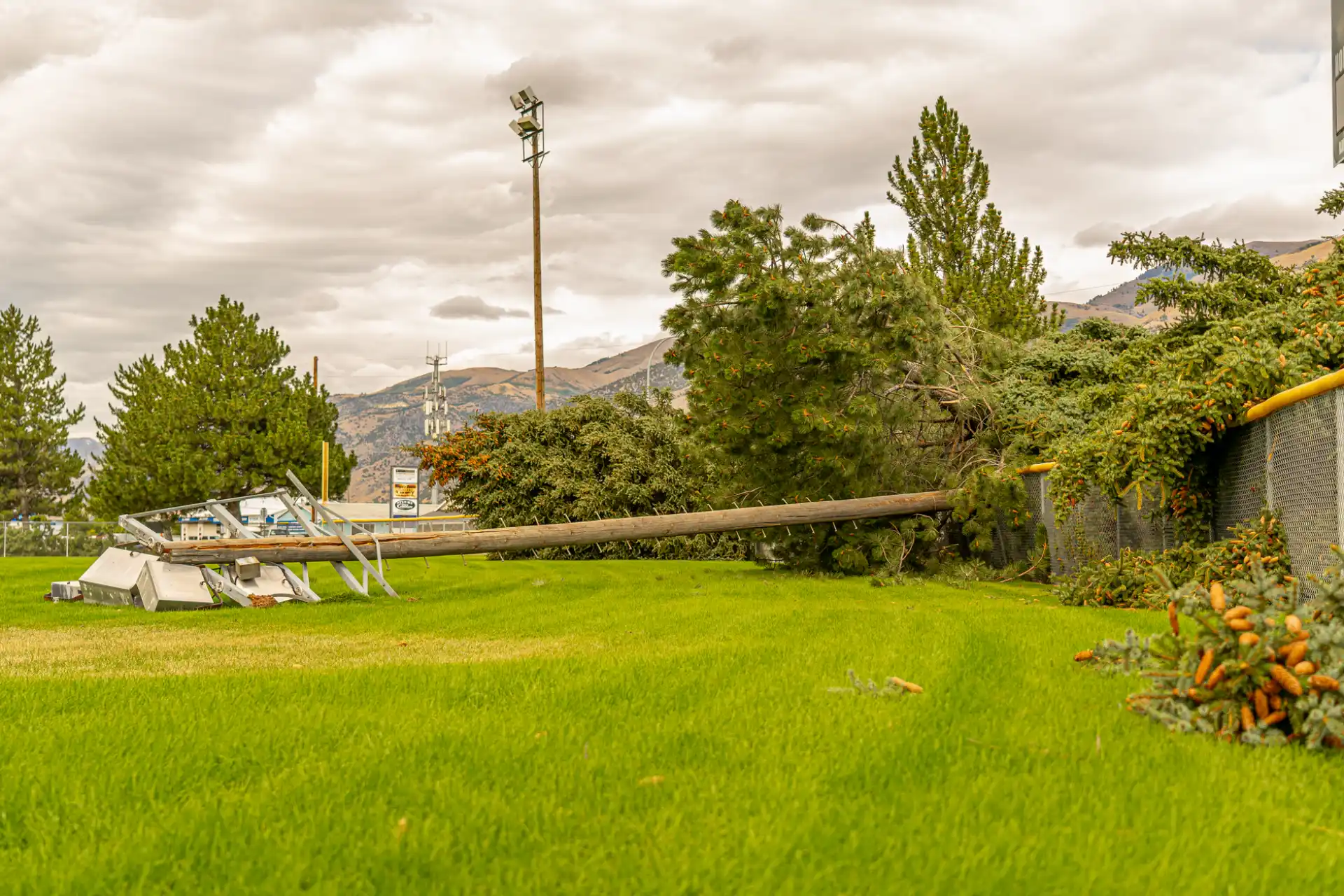
Blocked entrances, trees down across parking, hazards over walkways. Access restored first so the site can open, cleanup scheduled after.
Commercial Emergency Tree Service in Duluth, MN
Duluth Elite Treecare is a local resource for commercial emergency and storm tree service throughout Duluth, the Twin Ports and the surrounding Northland. We help business owners and property managers reach experienced arborists when a tree has closed part of a site or become a hazard over ground the public uses.
On commercial ground the clock is different. A tree down across a residential driveway is an inconvenience; the same tree across a business entrance closes the business, and a hazard over a public walkway is an exposure that exists whether or not anyone is currently under it. That changes the priority order on arrival — access and public safety come before the tree itself, which usually means securing and cordoning the area within minutes of arriving and dealing with the actual removal in a considered sequence afterwards.
It is worth separating the two things this page covers, because they get quoted differently. An emergency is something still capable of moving with a target under it: a tree on the building, a hanger over an entrance, a cracked stem above parked cars. Storm response is what follows once nothing is under load — debris across the site, damaged trees needing assessment, and a lot that has to be usable by Monday. Both are commonly needed after the same event, and rolling the second into the first at emergency rates is how a reasonable response turns into a disputed invoice. Anything in contact with a power line is neither: that is Minnesota Power's, and no saw goes near it.
What’s Included in a Duluth Commercial Emergency Tree Service Quote
- Rapid assessment of what is still under load and what has already come to rest
- Cordoning and securing hazard areas so staff, tenants and the public are kept clear
- Clearing blocked entrances, drive lanes, fire routes and parking so the site can operate
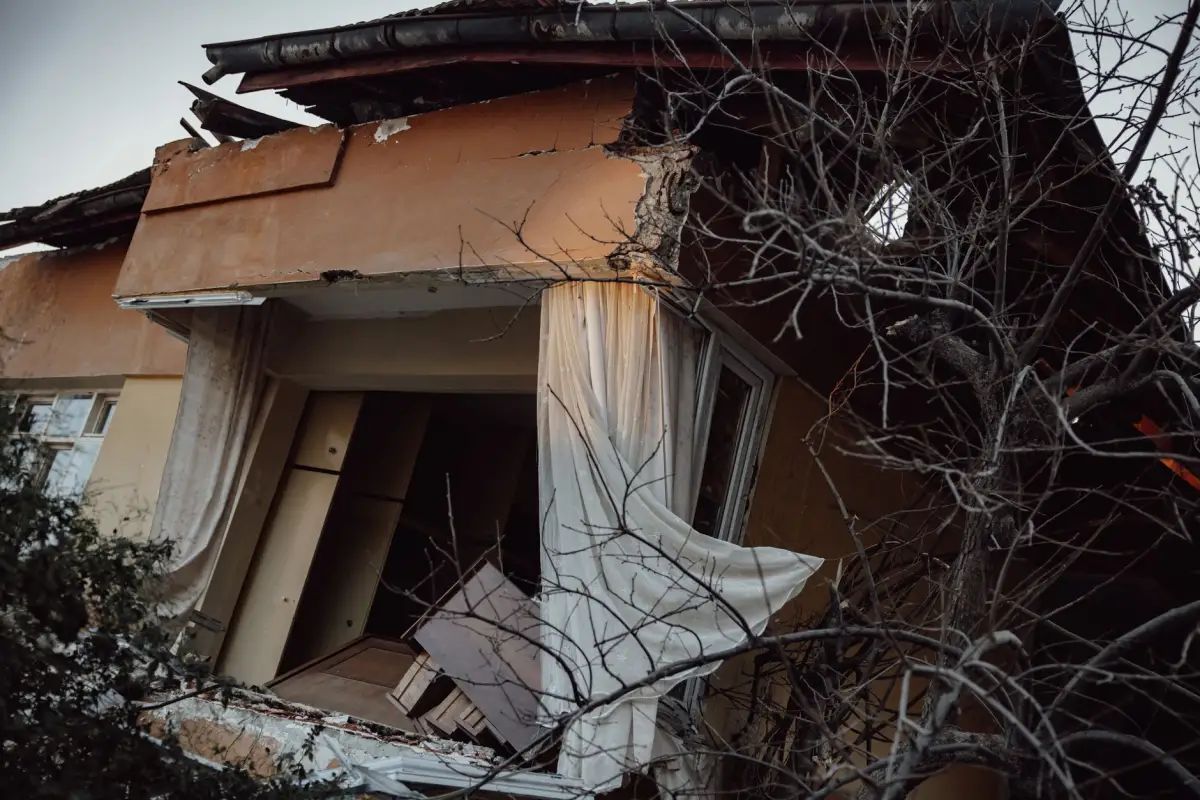
- Removal of trees and limbs off buildings, canopies, rooftop units, vehicles and signage
- Coordination with the utility before any work near lines or service drops
- Photographic record as found and as cleared, with an itemised invoice for insurance and management records
Commercial Emergency & Storm Tree Services in Duluth, MN
Emergency Commercial Tree Removal
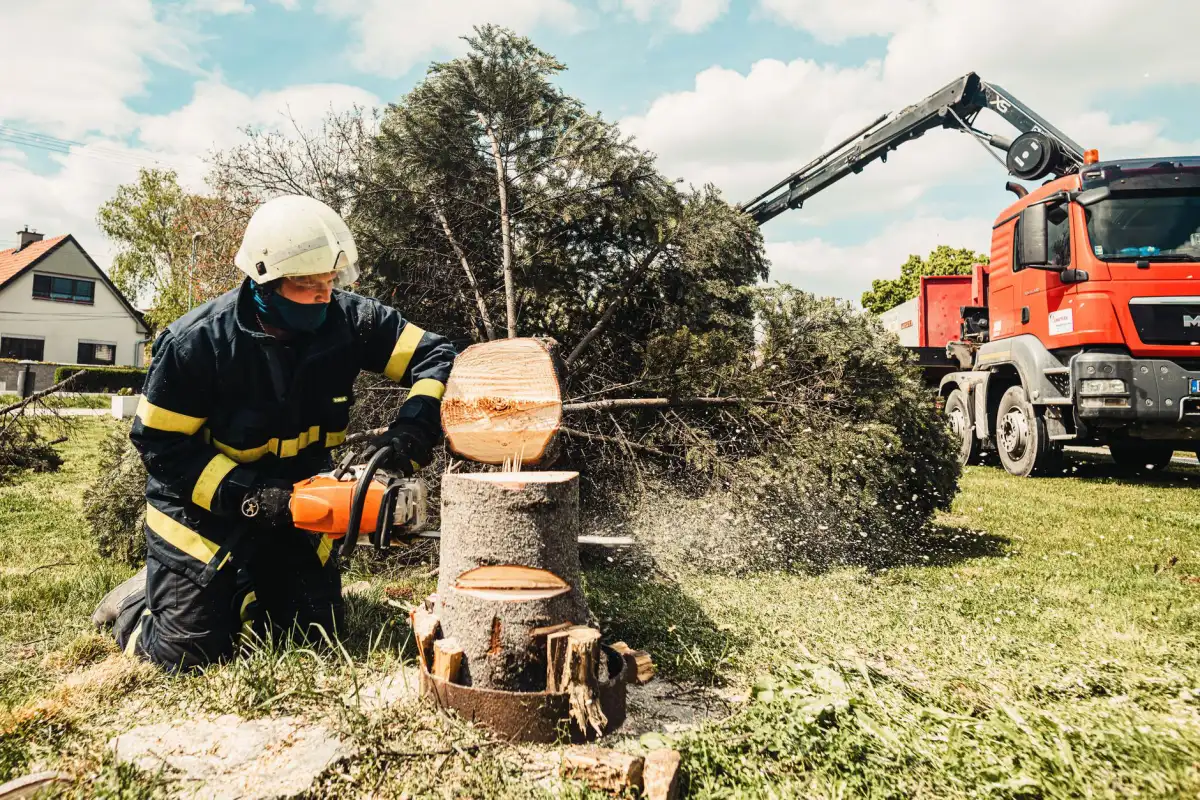
A removal carried out under load on ground the public can reach, which makes the exclusion zone as important as the cutting. A tree that has cracked, lost a stem or lifted its root plate is holding tension in places it was never designed to, so releasing it in the wrong order sends the load somewhere unpredictable — and on a commercial site that somewhere may contain parked cars, a walkway or a delivery bay. The area gets cordoned properly rather than coned, with spotters where people can come round a corner into it. Then the load gets relieved in stages, often by pulling with a line from a safe angle rather than climbing a tree that has already failed once.
Storm-Damaged Tree Removal
After the immediate hazards are handled, the standing damaged trees need decisions rather than reflexes. The workable test is how much crown survived and whether the trunk and main leaders are intact — a tree that kept most of its crown with no trunk damage or root plate movement generally recovers. On commercial ground there is a second question layered on top: what is underneath it, and how heavily used. A tree with a marginal prognosis over an empty boundary strip can be watched; the same tree over a customer walkway usually cannot. That is a risk decision rather than an arboricultural one, and it should be documented as such so the reasoning survives in the property record.
Fallen Trees on Commercial Properties
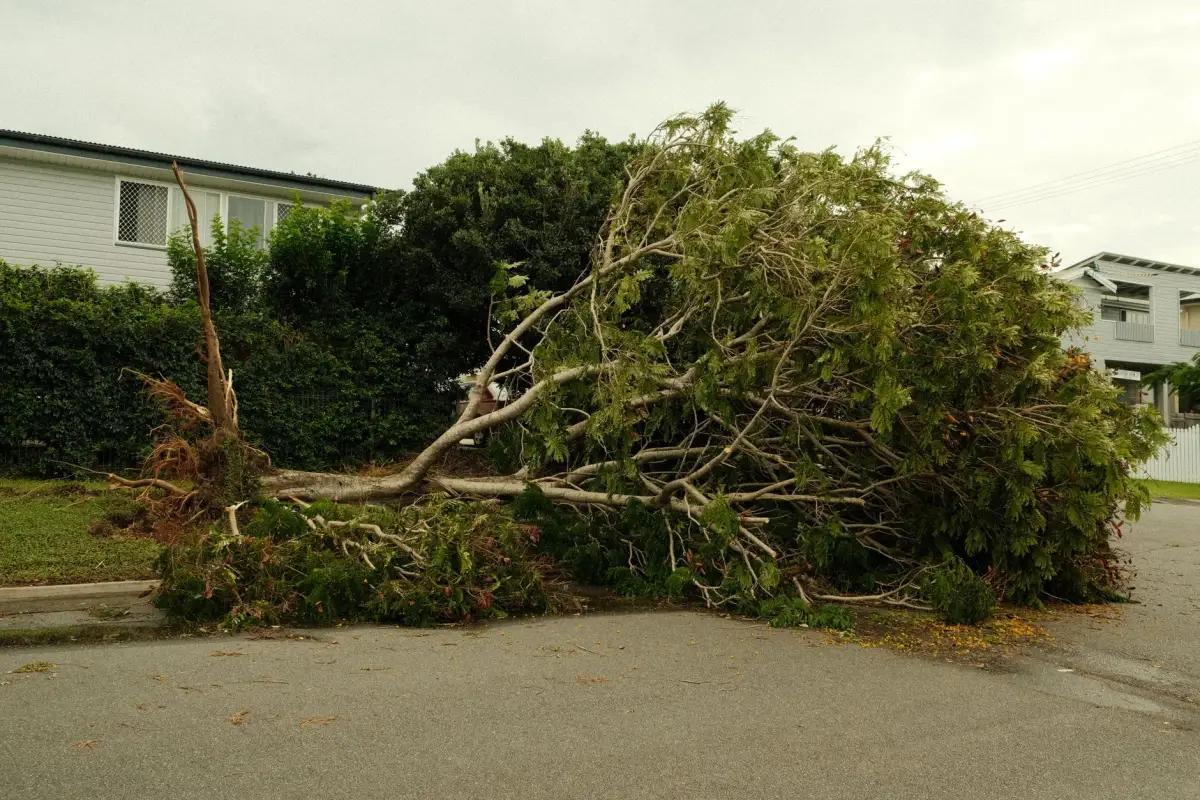
The first job with a tree already down on a commercial site is almost always access rather than removal — a fire route, a delivery bay, a drive lane or the entrance a business cannot open without. Clearing enough to restore function often takes a fraction of the time of removing everything, and it is worth asking for in that order. The cutting itself follows the loading rather than convenience: a trunk lying across a slope is propped on branches that spring when released, and a butt still attached to a partly lifted root plate can rotate back into its hole once the top comes off. On a graded Duluth site, that is the normal case.
Emergency Limb & Branch Removal
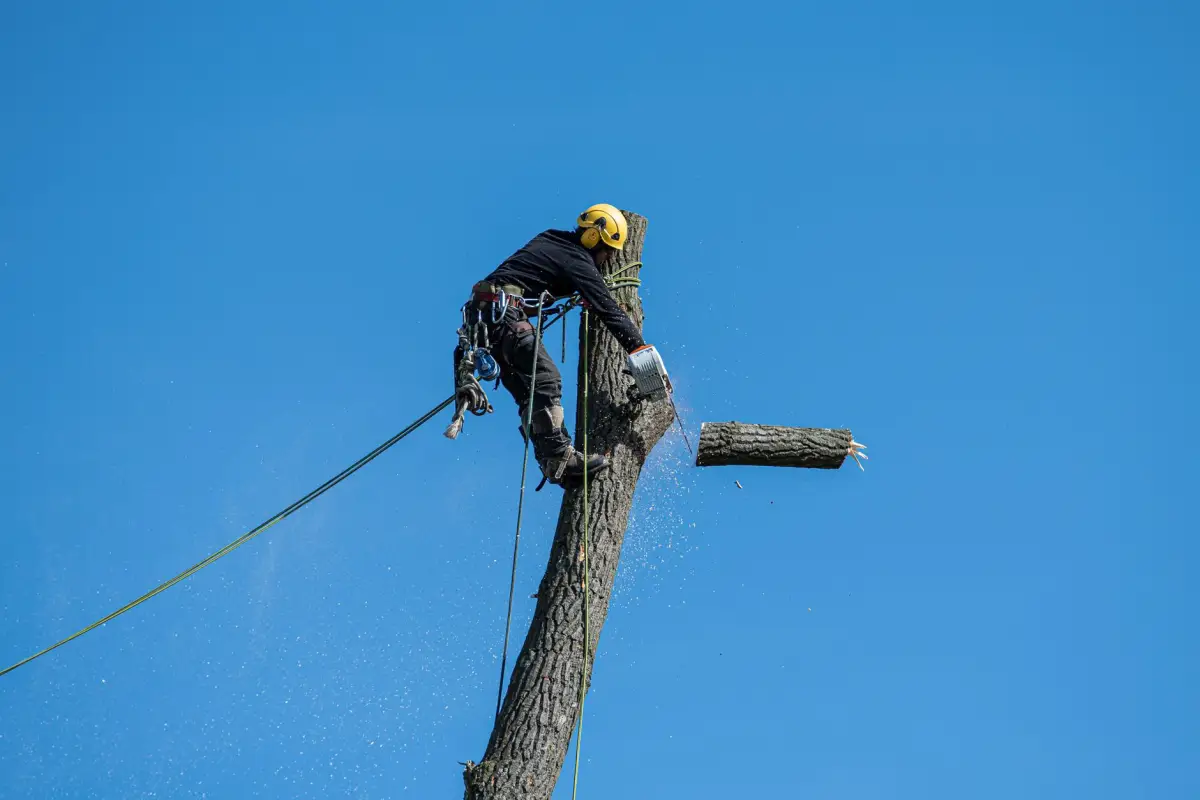
Hangers and split limbs over commercial ground are the classic deferred hazard: nothing happens for a week, then the wind shifts over a lunchtime. They come out from above or from a lift, never by cutting from underneath, and on a business site the area below has to be genuinely closed rather than signed while that happens. Split unions get secured before the piece is severed, since remaining fibres tear and swing. Dead ash raises the stakes — a tree that has been standing dead since emerald ash borer got into it has brittle unions throughout, so one failure usually means more waiting above it, and the assessment has to assume nothing in that crown is trustworthy.
Commercial Storm Debris Cleanup
This is the scheduled half, and it should be priced as scheduled work. Debris across parking and landscaping, brush chipped and removed rather than stacked, rounds hauled off, hard surfaces blown clean and the site returned to operating condition. On commercial ground the difference from residential cleanup is that it has to be done in phases the business can absorb — one zone at a time, released back as each finishes, rather than a site-wide shutdown. Where ash is in the material, disposal is constrained: St. Louis County sits inside the state emerald ash borer quarantine and hardwood cannot leave the county unless MDA-certified.
Signs You Need Commercial Emergency Tree Service
- A tree or limb is on the building, an entrance canopy, rooftop equipment, signage or a vehicle
- A fire route, drive lane, delivery bay or entrance is blocked and the site cannot operate normally
- A broken limb is hung up in a crown over parking, a walkway or an entrance
- A stem has cracked or a root plate has lifted on a tree above ground the public uses
- Storm debris across parking and landscaping that has to be cleared before the site reopens
- A tenant, insurer or inspection has flagged storm damage that needs assessing and documenting
How Commercial Emergency Tree Service Works
- 1
Triage by access and exposure, not by tree size
The first conversation establishes what is closed and what is dangerous, because on commercial ground those are frequently different trees. Is anything touching a power line or service drop, which makes it Minnesota Power's before it is anybody else's. Is the building sound and is everyone accounted for. Which routes are blocked — a fire route or a sole entrance outranks a bigger tree lying across an empty corner of the lot. Is there a hazard over ground the public can currently reach, which needs cordoning before it needs cutting. That ordering decides what gets an immediate response and what is properly a scheduled cleanup, and being told plainly that most of a site's damage falls into the second category is more useful to a manager than being told it is all urgent.
- 2
Secure the site before working on the tree
On arrival the exclusion zones go in first. Areas under anything still capable of moving get cordoned rather than coned, with physical barriers and spotters where staff, tenants or the public can come round a building corner into the work area — a taped line that people step over is not an exclusion zone. Blocked routes get identified so the sequence can restore function early: opening a fire route or the main entrance often takes a fraction of the effort of removing an entire tree, and it returns the site to operating condition while the rest proceeds. Where a lift or crane is needed, the standing space gets established now, since on a lot full of storm debris and displaced vehicles that is rarely straightforward. Damage gets photographed as found before anything is disturbed.
- 3
Relieve the load in a planned sequence
Everything still under load gets read before it gets cut: which parts are in compression, which in tension, what moves when a given piece is removed. Loaded limbs are roped before they are severed. Hangers come out from above or from a lift, never from beneath. A tree on a building is dismantled from the top and the ends inward so weight comes off the structure progressively rather than transferring to a different part of it. Where a stem is in bending tension, cuts go on the compression face first and finish on the tension face so fibres part rather than tear. Dead ash gets treated as untrustworthy throughout and worked from a lift rather than climbed. Sometimes the correct answer is to wait for equipment that can reach it safely rather than improvise.
- 4
Restore operation, document, and schedule the rest
Once nothing on the site can move on its own, the priority is function: entrances open, fire routes clear, drive lanes usable, walkways free and nothing overhanging where people go. Zones get released back as each is finished rather than held for the duration. Everything is photographed as found and as cleared, and the invoice is itemised — emergency response, tree removals, crown work and debris clearance as separate lines — because insurers query lump sums and property managers need the breakdown for their records. Then the honest separation: the remaining debris and the damaged trees needing assessment are scheduled work at scheduled rates. Rolling that into the emergency response is the single most common way a fair storm bill becomes a disputed one.
What Does Commercial Emergency Tree Service Cost in Duluth, MN?
- Whether the response is immediate or can be scheduled for the next working day
- How much of the site is closed, which routes are blocked, and how quickly function has to be restored
- Whether a structure is involved, since weight has to come off progressively rather than at once
- Access for a lift or crane on a lot that may be full of debris and displaced vehicles
- Extent of secondary hazard found on arrival — other cracked limbs, destabilised trees, dead ash in the mix
- Out-of-hours working, and whether the site can be worked at all during business hours
- Whether debris clearance is included now or quoted separately as scheduled cleanup
Emergency response costs more than scheduled work because it is unplanned, displaces other jobs and is genuinely more dangerous. What it should not be is open-ended. Ask for the emergency scope to be defined as making hazards safe and restoring access, with debris clearance and non-urgent removals quoted separately at normal rates. Storms also attract operators who follow weather across state lines and are not reachable afterwards — on commercial ground, where the work has to be documented for insurers and management records, that matters more than the day rate.
What to Look for in a Duluth Commercial Storm Response Company
They restore access before removing the tree
Opening a fire route or the main entrance often takes a fraction of the effort of the full removal, and it gets the site operating while the rest proceeds.
They cordon rather than cone
On ground the public can reach, a taped line people step over is not an exclusion zone. Physical barriers and spotters are the standard.
They separate emergency from cleanup on the invoice
Making hazards safe is one price. Hauling debris next week is another. Combining them at emergency rates is the usual source of disputed storm bills.
They document as found and as cleared
Photographs and itemised lines. Insurers query lump sums, and a property manager needs the breakdown for the file regardless.
They are reachable in March
Storm work draws operators who follow weather and leave. On commercial ground, where the paperwork matters, that is a real consideration.
Residential & Commercial Commercial Emergency Tree Service
Residential
Residential emergency and storm work is scoped for a single property without site closure, phasing or public access considerations. See the residential emergency and storm cleanup pages.
Commercial
Retail, office, industrial, institutional and managed property. Response is prioritised by access and public exposure, documented for insurers and management, with cleanup scheduled separately from the emergency work.
When Commercial Emergency Tree Service Isn’t the Right Call
- Anything is in contact with a power line or service drop. That belongs to Minnesota Power, or to CenturyLink or Charter for their own lines, and no arborist should be cutting near an energised conductor. Cordon the area and call the utility.
- The building is structurally compromised or anyone is injured. That is an emergency services call first — the tree work follows once the people and structure questions are handled.
- Everything has already come down, nothing left is under load, and the site is simply covered in debris. That is storm cleanup and should be scheduled at normal rates rather than called in as an emergency.
- It is a boulevard tree on your frontage, or a tree along the Interstate, Mesaba Avenue, or London Road between 26th and 60th Ave E. Those are the city's and MnDOT's respectively.
- A few branches are down on landscaping and nothing is blocked or overhanging. That is grounds maintenance, not tree work.
- Somebody has turned up on site offering to clear it immediately for cash. On commercial property, where the work has to be documented and invoiced properly, that is not a shortcut worth taking.
Frequently Asked Questions
- What counts as a commercial tree emergency?
- Something still capable of moving with a target under it, or a blockage that stops the site operating. A tree on the building, a hanger over an entrance, a cracked stem above parked cars, or a fallen tree across a fire route or the only delivery access. If everything has come to rest and nothing is under load, it is storm cleanup — schedule it and pay scheduled rates. Being clear about which you have when you call is what gets you priced correctly.
- How quickly can a commercial site be reopened?
- Faster than the full cleanup takes, if access is prioritised deliberately. Clearing enough to restore a fire route, a drive lane or the main entrance is often a fraction of the work of removing everything, and it returns the site to operating condition while the rest proceeds in zones. It is worth asking for the response in that order rather than assuming the crew will work tree by tree from whichever end is easiest to reach.
- Who is responsible if a tree falls on a tenant's vehicle?
- That is a question for your insurer and, in a managed property, for the lease — it turns on the specific policies and agreements rather than on anything a tree service can determine. What is useful from this side is documentation: photographs of the tree and the damage as found, a record of the tree's prior condition if one exists, and an itemised invoice. Sites with a maintenance and assessment record are in a considerably better position here than sites without one.
- Is storm response available outside business hours?
- Availability depends on the crew and on how many other calls came in from the same event, so it is worth asking rather than assuming a window. After a widespread wind or wet snow event across the Twin Ports, everyone calls at once and genuine life-safety and structural situations get prioritised. Describing the situation accurately — what is blocked, what is over occupied ground, what is still under load — is what gets a commercial site correctly placed in that order.
- How should the invoice be structured for an insurance claim?
- Itemised, with emergency response, tree removals, crown work and debris clearance as separate lines, supported by photographs taken as found and as cleared. Insurers routinely query lump sums with no breakdown, and the evidence disappears the moment the first cut is made. It is also worth notifying the insurer before work beyond making the site safe is carried out, since several want the opportunity to inspect.
- Why is dead ash treated differently in storm response?
- Because nothing in the crown can be trusted. Emerald ash borer was detected in Duluth in late 2015, and an ash that has been dead a season or two has brittle unions throughout — one failure in a storm usually means several more waiting above it. That rules out climbing the tree and pushes the work to a lift, which changes the method, the time and the price. It is also the strongest argument for removing dead ash on a commercial site before a storm rather than after.
Learn More
- UMN Extension — Storm Damage to Landscape Trees — How to judge whether a storm-damaged tree is worth retaining, based on surviving crown and trunk condition.
- City of Duluth — Urban Forestry FAQs — Who to contact about a dangerous boulevard tree on a commercial frontage, and confirmation that line clearance sits with the utility owner.
- Minnesota DNR — Tree Care and Forest Health — State guidance on assessing damaged trees and the pest and disease pressures that make failure more likely in a storm.
Need Commercial Emergency Tree Service in Duluth, MN?
Tell us what’s going on and get an on-site estimate — no charge for the visit, and no obligation to book the work.
Get My Free Estimate