Tree Removal in Duluth, MN — Residential & Commercial Tree Removal Specialists
Dead ash, storm-cracked conifers, and big trees standing too close to a house. Every removal is priced on site, after someone has looked at the access and the drop zone.
Tree Removal in Duluth, MN
Duluth Elite Treecare is a local resource for tree removal throughout Duluth, the Twin Ports and the surrounding Northland. We help homeowners connect with experienced arborists who take down the hazard trees, dead ash and oversized conifers that come with growing timber on a hillside.
Most removals in this city are decided by access, not by trunk diameter. Duluth's residential lots step up from the lake on steep grade, with clay soils and bedrock close to the surface, and a lot of them have no place to drop a tree whole and no way to get a bucket truck past the garage. That is why a 70-foot white pine behind a Congdon Park house gets rigged down in sections on a lowering line while the same tree in an open field gets felled in one cut — and why the two jobs are not priced the same.
The other thing driving removal volume here is emerald ash borer, detected in Duluth in late 2015. The city counts roughly 3,000 boulevard ash, second only to maple, and states plainly that private homeowners are responsible for any ash on their own property. A dead ash does not get safer while you think about it. It gets more brittle, which turns a routine climb into a job that has to be done from a lift or taken apart from the top with rigging that assumes nothing will hold.
What’s Included in a Duluth Tree Removal Quote
- On-site assessment of lean, decay, root plate and the actual drop zone before any price is quoted
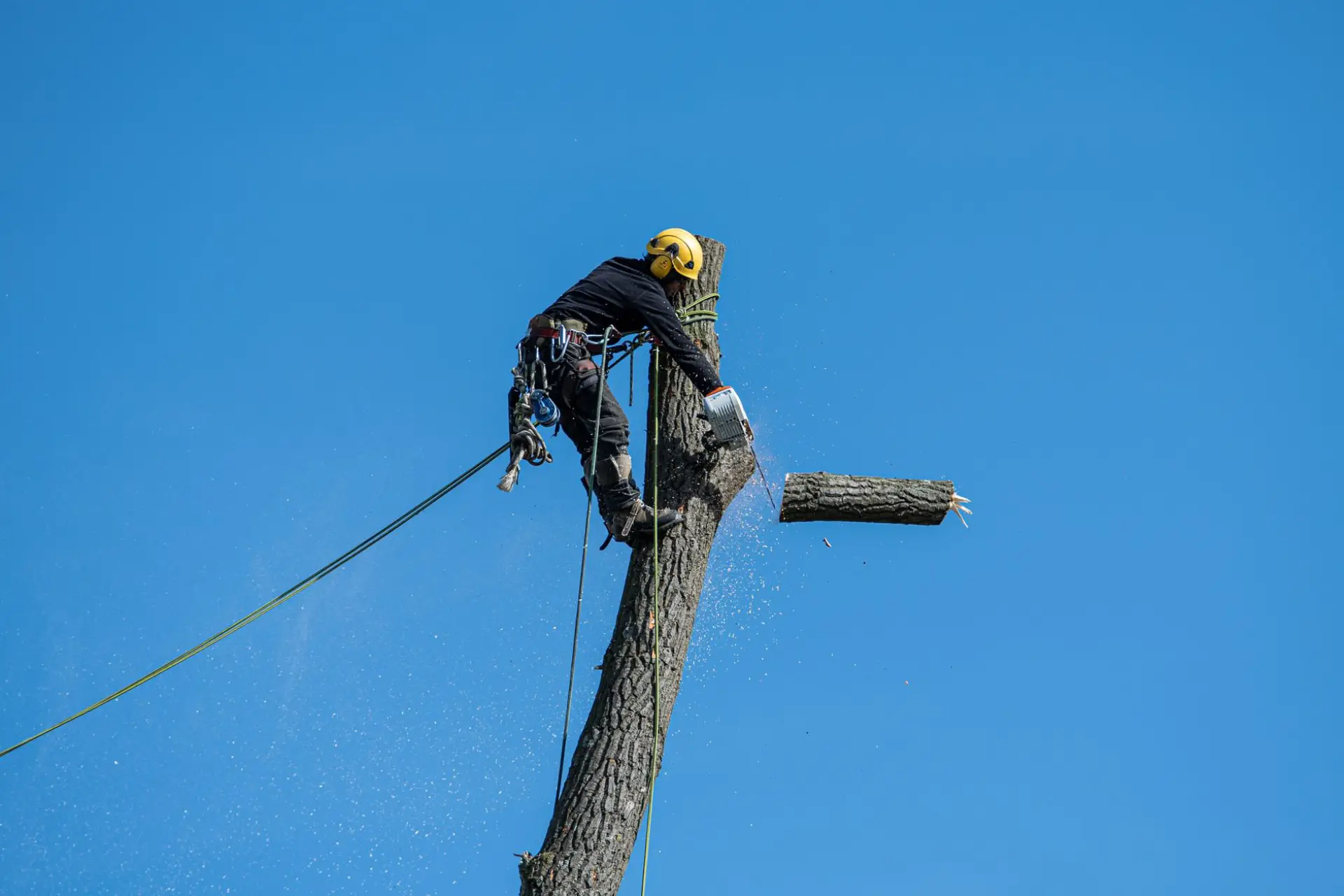
- Sectional dismantle with rigging and lowering lines where there is no room to fell the tree whole
- Removal of trees close to houses, garages, fences, decks and power drops
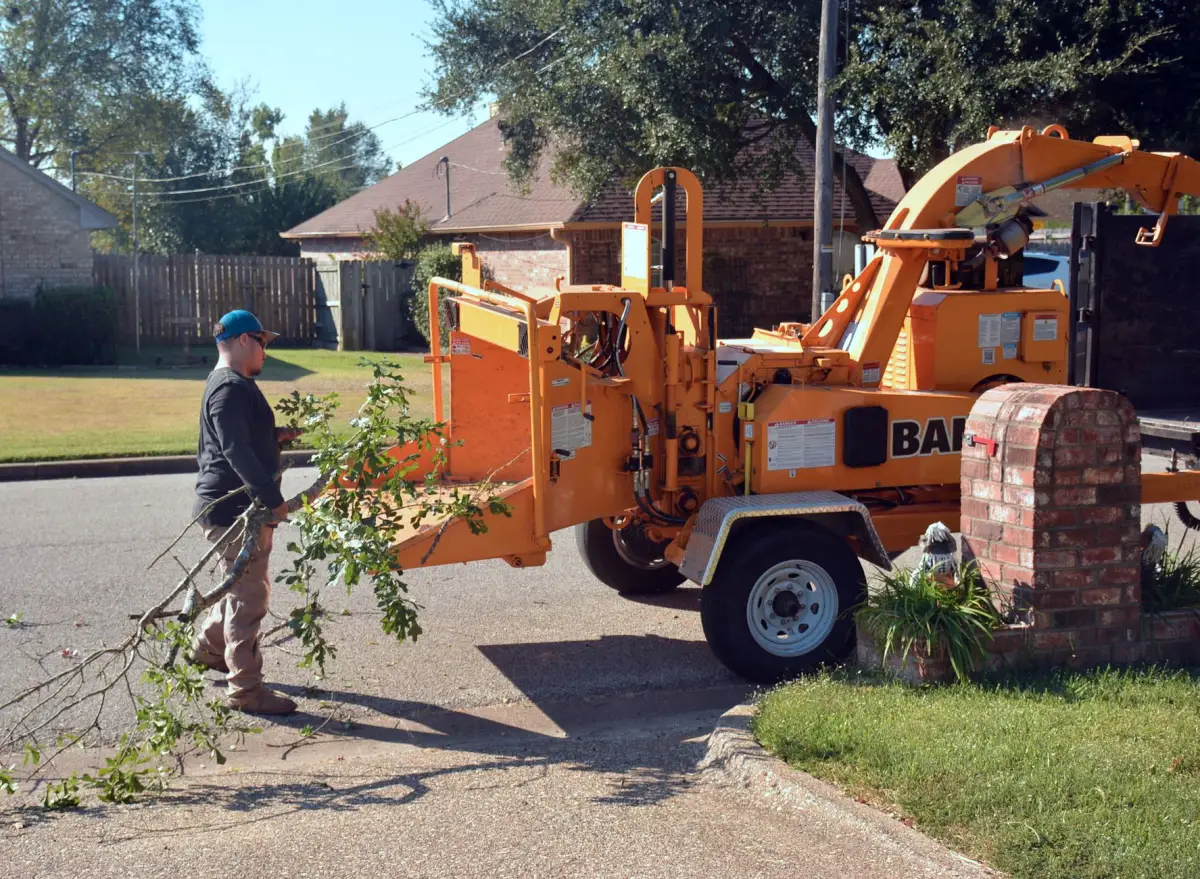
- Brush run through a chipper, trunk wood cut to rounds or hauled off site
- Rake-out of the work area, with the stump cut low and flush for grinding later
- Coordination on where the wood goes — St. Louis County sits inside the state ash quarantine
Professional Tree Removal in Duluth, MN
Dead Tree Removal
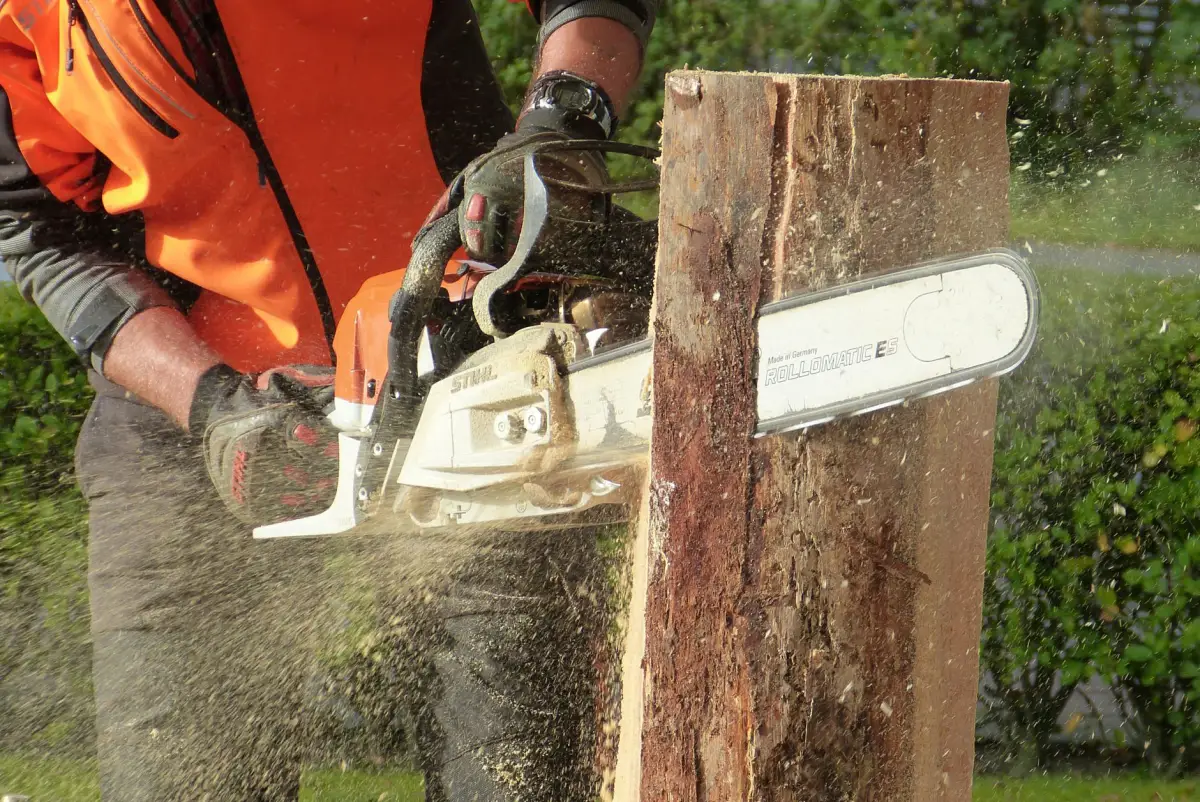
A dead tree is a different job from a live one, and it gets more expensive the longer it stands. Once an ash has been dead a season or two, the sapwood dries and the limb unions let go without warning — which means no climbing it, no spiking up it, and no rigging that assumes the top will hold weight. It comes apart from a lift where the ground allows one, or in small pieces on light rigging where it does not. The City of Duluth puts the same point more bluntly than most contractors will: removing an ash while it is still alive is less expensive and less dangerous than letting it weaken and die first. That is the whole argument for not waiting.
Hazardous Tree Removal
Hazardous means there is a target underneath — a roof, a driveway, a gas meter, a neighbour's fence — and a defect above it. The defects that come up most often here are co-dominant stems with included bark, decay at the base of a stem that took a car bumper years ago, and a root plate that has started to lift after a spring thaw saturated the clay. That last one is the reason a healthy-looking spruce ends up on its side in a Lakeside yard with no visible rot anywhere on the trunk. A leaning tree is not automatically a hazardous one, and a vertical tree is not automatically safe. What matters is whether the defect and the target line up.
Large Tree Removal
Big white pine, mature maple and the 80-foot spruce planted too close to the house in 1970 all come down the same way when there is no drop zone: piece by piece, tied off, lowered rather than dropped. A climber sets a rigging point in the spar above the cut, the piece gets roped before the saw goes in, and it comes down under control onto a spot the size of a picnic table. On a Woodland lot with a 30-foot back yard and a fence on both sides, that can mean 40 or 50 separate lowers on one tree. Size drives cost, but the number of pieces drives it harder, and the number of pieces is a function of what is underneath.
Tree Removal Near Homes & Structures
The closer the tree is to the house, the less the trunk diameter matters. A modest tree three feet off a foundation with a bay window under it takes longer than a much larger tree standing alone, because every piece has to be controlled all the way to the ground rather than allowed to fall. Roof pitch, gutter runs, the service drop from the pole, a septic lid, a paver patio that will crack under a dropped round — those are the things that get walked before a price gets quoted. Where the tree overhangs a property line, the work gets planned from your side of the line; the city is explicit that it does not arbitrate disputes between neighbours over trees.
Residential Tree Removal & Cleanup
Cleanup is where a quote either matches the job or does not, so it is worth pinning down in writing. Brush and limbs go through a chipper. Trunk wood gets cut to rounds and stacked, or hauled off, and those are two different prices — a lot of homeowners in Piedmont and Duluth Heights want the rounds kept for firewood, which is fine on your own property. Moving that wood out of St. Louis County is another matter: the county sits inside the state emerald ash borer quarantine, and hardwood firewood cannot legally leave a quarantined county unless it is MDA-certified. Ruts in a wet lawn, sawdust in the flower beds and the stump left standing knee-high are the three things worth asking about before anyone starts.
Signs You Need Tree Removal
- Bark falling off in sheets and small woodpecker holes in an ash — that combination usually means emerald ash borer has already been in the tree for years
- Mushrooms or a shelf fungus growing at the base of the trunk or over a surface root
- A crack running vertically where two main stems meet, with dark staining or ingrown bark in the union
- The ground on one side of the trunk has heaved or split, or the root plate is visibly lifting after a wet spring
- A hollow that a hand fits into at the base, or a trunk that sounds drummy when you knock on it
- Deadwood in the upper crown that keeps landing on the driveway after every wind event
How Tree Removal Works
- 1
Walk the tree and the ground under it
The assessment starts at the base and works up, and about half of it is spent looking at things that are not the tree. Where is the drop zone, and is there one at all. Can a chip truck get within hose-length of the work, or does everything have to be carried out to the street. Where is the service drop from the pole, the gas meter, the septic lid, the leach field, the paver patio that will crack under a dropped round. Then the tree itself: lean and which way it is loaded, decay at the base, co-dominant stems with included bark, the condition of the root plate, whether the upper crown is sound enough to hold a rigging point. On a Duluth hillside lot the ground answers most of the questions before the tree does. A tree with a clean drop zone gets felled. A tree with a garage under it gets dismantled, and that is a different day and a different number.
- 2
Set the rig and clear the work area
Before a saw runs, the drop zone gets cleared and roped off, vehicles get moved, and anything that cannot take a falling limb comes out of the way. If the tree is coming apart in sections, the climber sets a rigging point above the first cut and runs a lowering line through a block so each piece is under tension before it is severed. On tight urban lots that block often gets set on a neighbouring tree or an anchor at the base to redirect the load away from the house. Speedlines get rigged where limbs have to travel horizontally over a fence or a garden rather than straight down. Where the tree is dead and the wood cannot be trusted, the plan changes — a lift goes in if the grade allows, or the tree gets taken in smaller pieces on lighter rigging that does not bet on the spar holding.
- 3
Take it down in the order the site allows
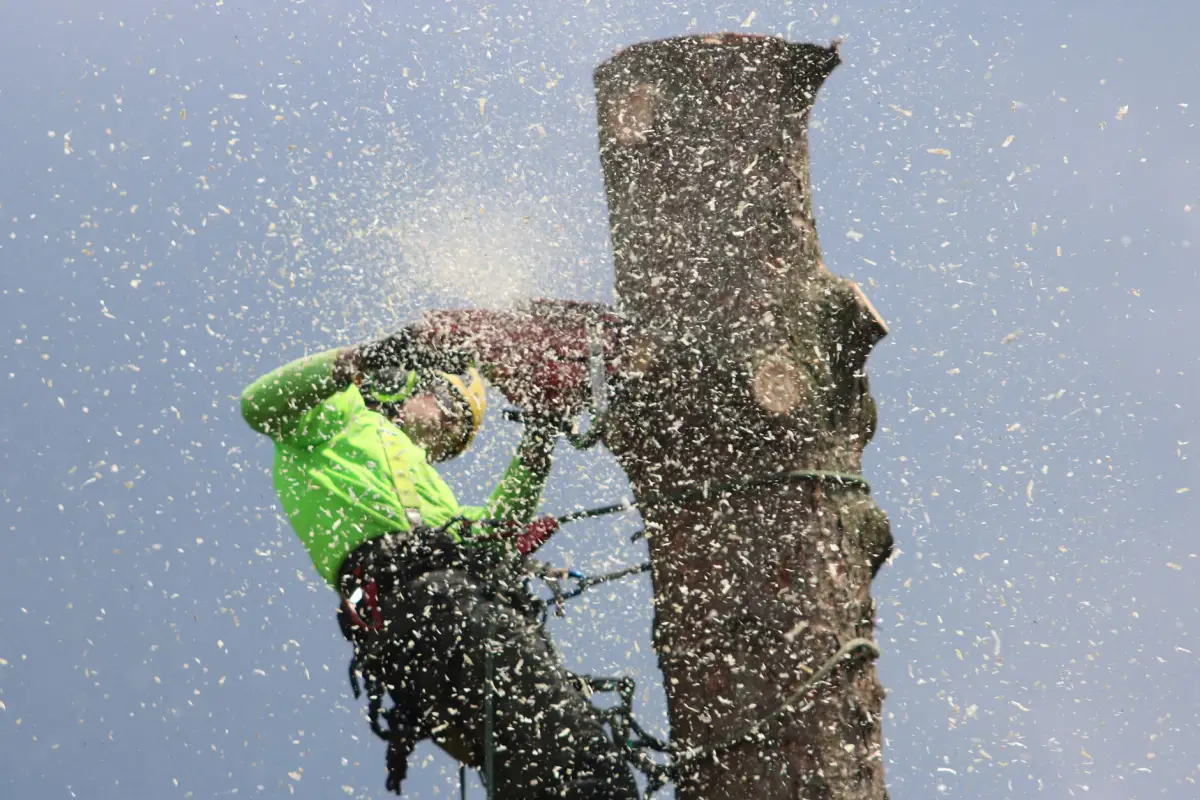
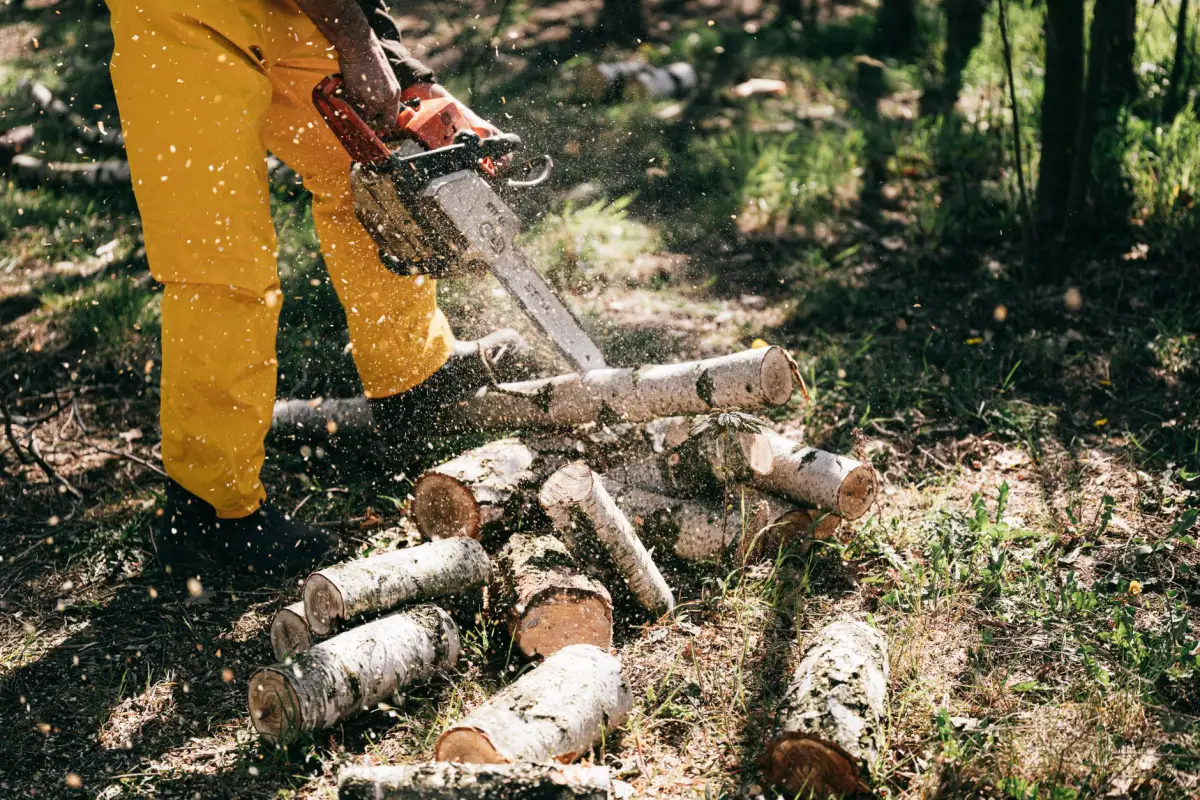
A tree with room gets a face cut, a back cut and hinge wood sized to steer it, and it goes over in one piece into the cleared zone. Everything else comes down from the top. Limbs come off first, tied and lowered, working around the tree so the spar stays balanced and nothing loads it in one direction. Then the spar itself gets blocked down in rounds, each one roped and lowered rather than dropped, until the climber is low enough to fell the remaining stem safely. Spikes are used here because the tree is not staying — they have no place on a tree that is being pruned. As pieces reach the ground they get dragged clear immediately, because a cluttered landing zone is how the next piece ends up somewhere it was not supposed to go.
- 4
Chip, haul and rake out
Brush goes through the chipper as it comes down rather than piling up, which keeps the work area open and shortens the day. Trunk wood gets cut to whatever length was agreed — rounds stacked on site for firewood, or loaded and hauled. Where ash is involved, the destination matters: St. Louis County is inside the state emerald ash borer quarantine, and hardwood firewood cannot legally be moved out of a quarantined county unless it has been MDA-certified, so ash wood either stays local or goes to an approved site. The stump gets cut as low and level as the root flare allows, which makes grinding cheaper later if you want it done. Then the area gets raked out, chips blown off hard surfaces, and the drive and lawn checked for ruts before anyone leaves.
What Does Tree Removal Cost in Duluth, MN?
- Access above everything else — whether a chip truck and lift can reach the tree, or every piece has to be carried out by hand
- Whether the tree can be felled whole or has to be dismantled in sections, and roughly how many separate lowers that means
- What is underneath: roof, fence, power drop, patio, septic, or open lawn
- Height and stem diameter, and how much of the total volume is heavy trunk wood versus brush
- Whether the tree is dead and brittle, which rules out climbing it and changes the whole method
- Where the wood goes — chipped and hauled, stacked on site, or ash that has to stay inside the quarantine area
- Grade and ground conditions, since a saturated clay slope can rut badly and may need matting
Be careful with a number quoted over the phone from a photo. The two things that move a removal price most — what a lift or chip truck can actually reach, and how much has to be lowered rather than dropped — are the two things a photo hides. A quote given sight-unseen tends to arrive as a low number and leave as a higher one. Get the price on site, in writing, with the cleanup spelled out: chipped and hauled, or rounds left stacked in the yard, are not the same job.
What to Look for in a Duluth Tree Removal Company
They walk the site before quoting
Access and drop zone are the price. Anyone willing to commit to a number without standing under the tree is guessing, and the guess is rarely in your favour.
They can say why the tree is coming down
A specific defect named out loud — included bark in a co-dominant union, decay at the base, a lifting root plate — is a different conversation from vague talk about a tree looking risky.
They put cleanup in writing
Chipped and hauled, rounds stacked, stump cut low, chips blown off the drive. Every one of those is a line item, and the disputes almost always land there.
They do not sell you topping
If a company offers to top a tree instead of removing it, that tells you what standard the rest of their work is held to. Topping is not a treatment for a hazardous tree, it is a way to create one.
They know where the wood can go
St. Louis County is inside the state ash quarantine. A company that has never heard of it has not been paying attention to the single biggest driver of removal work in this city.
Residential & Commercial Tree Removal
Residential
Yard trees, boulevard-adjacent trees on your own property, and the big conifers on Duluth's hillside lots where there is nowhere to drop anything whole. Most residential removals here are one to three trees, done in a day, with the work planned around a driveway, a fence line and a neighbour's roof.
Commercial
Parking lot islands, apartment and rental property grounds, and multi-tree work on commercial sites where the schedule has to fit around business hours and customer parking. Larger removal projects on commercial ground are covered in more detail on the commercial tree removal page.
When Tree Removal Isn’t the Right Call
- The tree is on the boulevard between the sidewalk and the street. That is city property in Duluth, and removing it is against City Code Section 35-28(a)(2) — the city does not allow residents to run power equipment on city property either. Report it through the city's Resident Problem Reporter instead. If you are not sure where the right of way ends, the St. Louis County Land Explorer will show you.
- The tree is growing into a power line. Line clearance belongs to the utility that owns the line — Minnesota Power, CenturyLink or Charter — not to the city and not to a tree service. That work is normally done at no cost to you, so call them first.
- It is a sapling under about four inches through. A homeowner with a pole saw and an afternoon handles that, and paying for a crew, a truck and a chipper to do it is a poor trade.
- The tree is healthy, well-placed and simply large. Big is not a defect. A sound tree with no target under it and no structural problem does not need removing, and a company that tells you otherwise is selling, not assessing.
- The tree is over the line and clearly your neighbour's. The city is explicit that it does not arbitrate civil disputes over trees, so that conversation has to happen between the two of you before any work gets scheduled.
- You are outside St. Louis, Carlton or Lake county in Minnesota, or Douglas County in Wisconsin. Ask anyway if you are close to the edge, but a job three hours down the shore is not one to arrange from here.
Frequently Asked Questions
- How much does tree removal cost in Duluth, MN?
- It is quoted per tree after someone has looked at it, because the two biggest cost drivers are invisible in a photo: whether equipment can reach the tree, and whether it can be felled whole or has to be lowered piece by piece. On a Duluth hillside lot with no access to the back yard, a mid-sized tree can cost more than a much larger one standing in an open field. Ask for the price in writing with cleanup itemised, and treat a firm number given over the phone as an estimate that will move.
- Do I need a permit to remove a tree in Duluth?
- Not for a tree on your own property. The line that matters is the boulevard: trees between the sidewalk and the street are city property, and removing one is against City Code Section 35-28(a)(2). If you are unsure whether a tree is in the right of way, the city points residents to the St. Louis County Land Explorer, or you can ask the City Forester to make an on-site determination.
- Should I remove my ash tree before it dies?
- If you are not treating it, yes, and the City of Duluth says so directly — removing an ash while it is still alive is less expensive and less dangerous than waiting for emerald ash borer to kill it. A dead ash loses limbs unpredictably and cannot be safely climbed, so the same tree costs more to take down two years later and has to be dismantled from a lift or on rigging that trusts nothing. EAB was detected in Duluth in late 2015, and the city is clear that ash on private property is the homeowner's responsibility.
- Can a large tree be removed if there is no room to drop it?
- That is the normal case here, not the exception. The tree gets dismantled from the top: limbs are tied off and lowered on a rigging line, then the trunk is blocked down in rounds, each one roped and lowered onto a small cleared area. Where limbs have to travel sideways over a fence or a garden bed, a speedline carries them out. It takes longer than felling and it costs more, which is why access — not trunk diameter — is the first thing that gets assessed.
- What happens to the wood and the brush?
- Brush goes through a chipper. Trunk wood is either cut to rounds and left stacked, or hauled off site, and those are priced differently — agree which one before the work starts. Ash is a special case: St. Louis County is inside the state emerald ash borer quarantine, so hardwood firewood cannot legally be moved out of the county unless it is MDA-certified. Keeping ash rounds on your own property is fine. Loading them up and taking them to a cabin elsewhere is not.
- Is the stump included in a tree removal?
- Usually not. Removal normally ends with the stump cut as low and level as the root flare allows, and grinding it out is a separate service with its own equipment. It is worth quoting both at the same visit, since a stump that has been cut low is quicker and cheaper to grind than one left knee-high.
Learn More
- City of Duluth — Emerald Ash Borer — The city's EAB program: detection in late 2015, the roughly 3,000 boulevard ash in Duluth, and what homeowners are responsible for on private property.
- City of Duluth — Urban Forestry FAQs — Boulevard tree rules including City Code Section 35-28(a)(2), how to check whether a tree is in the right of way, and who handles utility line clearance.
- Minnesota Department of Agriculture — Emerald Ash Borer — The state quarantine covering St. Louis County and the rules on moving ash wood and hardwood firewood out of a quarantined area.
Need Tree Removal in Duluth, MN?
Tell us what’s going on and get an on-site estimate — no charge for the visit, and no obligation to book the work.
Get My Free Estimate