Tree Service in Esko, MN — Residential & Commercial Tree Care Specialists
Old farmstead ground turned residential, septic fields under the drop zone, and no city forestry crew to call. Every job is priced on site.
Duluth Elite Treecare is a local resource for tree removal, trimming, storm cleanup and stump grinding throughout Esko and Thomson Township. We help property owners connect with experienced arborists who handle the hazard trees, crown work and cleanup that come with township lots and a lot of old farm ground.
Esko is a community rather than a city — an unincorporated place inside Thomson Township, at the junction of Interstate 35 and County Road 61. That matters more than it sounds. There is no municipal forestry department here, no city crew that handles a boulevard tree, and no city ordinance drawing the line between what is yours and what is not. On most properties, the tree is entirely the owner's problem and entirely the owner's decision.
The ground is old farm ground. Finnish, Norwegian and Swedish settlers took up land here between the 1870s and the early 1900s, and the community got its name from a store built at what became Esko's Corner in 1919. What is left from that period is scattered across lots that are now residential: yard trees and field-edge trees that grew as part of something else and are now standing next to a house.
Tree Services We Offer in Esko, MN
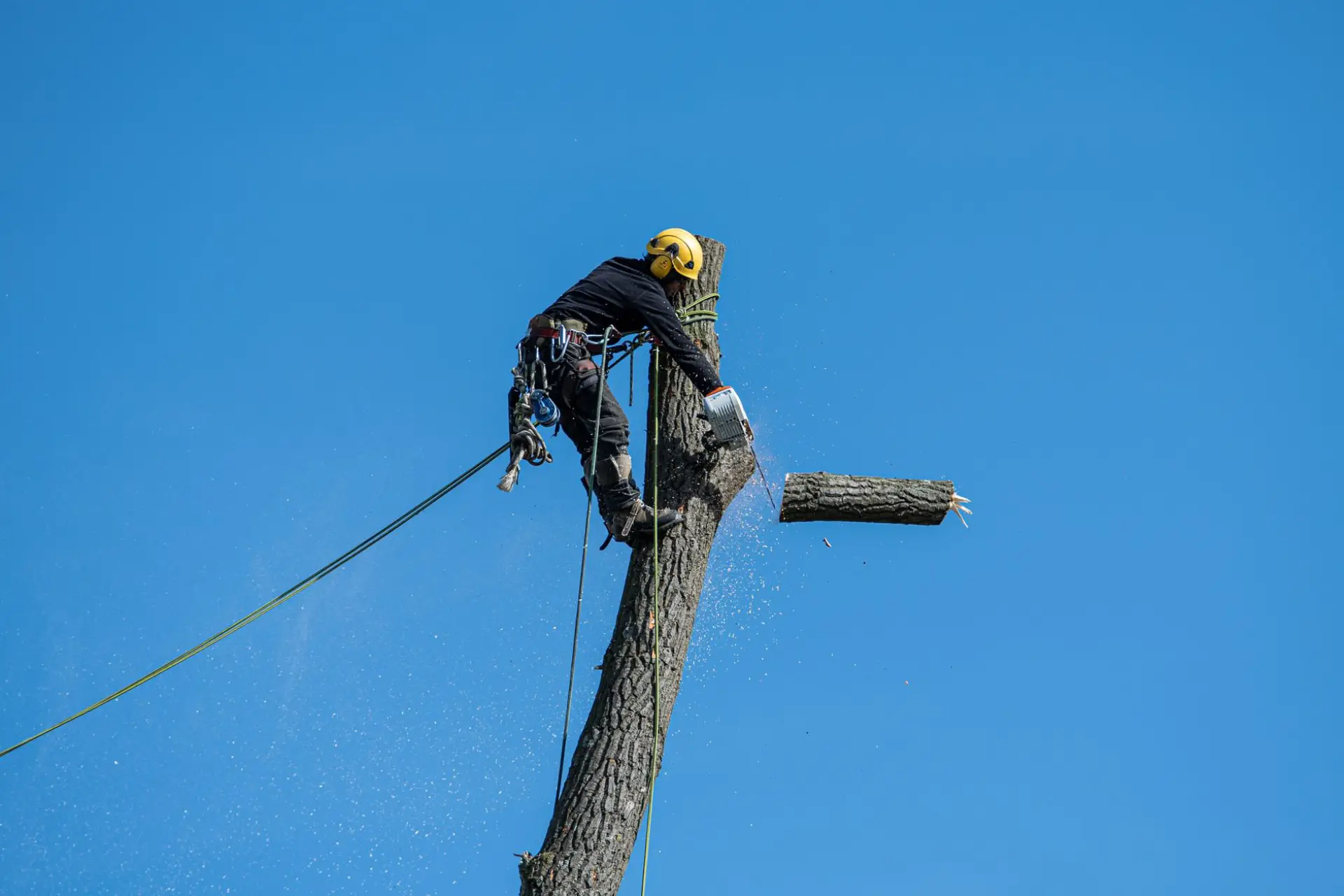
Tree Removal in Esko, MN
Dead ash, overmature farmstead trees close to buildings, and hazard trees over drives and outbuildings. On the larger township parcels a felling is often possible, which is the cheapest version of the job — worth confirming before assuming a dismantle.
More on Tree RemovalTree Trimming in Esko, MN
Deadwood removed, overextended limbs reduced, and clearance pruned off roofs, drives and outbuildings. Old field-edge trees carry weight unevenly, and that is usually where the pruning work is.
More on Tree TrimmingEmergency Tree Service in Esko, MN
Trees down on houses, sheds and long driveways, and limbs left hanging where nobody should be underneath. Access opened and the hazard made safe first, debris scheduled after.
More on Emergency Tree ServiceStump Grinding in Esko, MN
Stumps ground below grade with surface roots chased where they are lifting sod. On unsewered properties the locate call matters twice over — buried utility lines and a septic system are both underneath somewhere.
More on Stump GrindingTree Pruning & Tree Health in Esko, MN
Assessments on mature trees, structural pruning on young ones while it is still one small cut, deadwooding, and cabling where a defect is worth supporting. The honest output is a short list and a date to look again.
More on Tree Pruning & Tree HealthStorm Damage Tree Cleanup in Esko, MN
Fallen trees cleared, broken tops and hangers taken out, and torn stubs cut back cleanly. On acreage properties there is usually more debris than people expect, and it should be priced by volume rather than guessed at.
More on Storm Damage Tree Cleanup

Residential Tree Service in Esko, MN
Residential property here ranges from village lots at the corner out to several-acre parcels on the township roads, and the method changes with the acreage. On the bigger lots a tree with a clean drop zone gets a face cut, a back cut and hinge wood sized to steer it, and it goes over in one piece. On the tighter ones it comes down in sections like anywhere else.
What is consistent is that there is no municipal backstop. A dead ash in the front yard is the owner's to deal with, on the owner's timeline, and Carlton County's emerald ash borer quarantine means where the wood goes afterwards is a real question rather than an afterthought.
Commercial Tree Service in Esko, MN
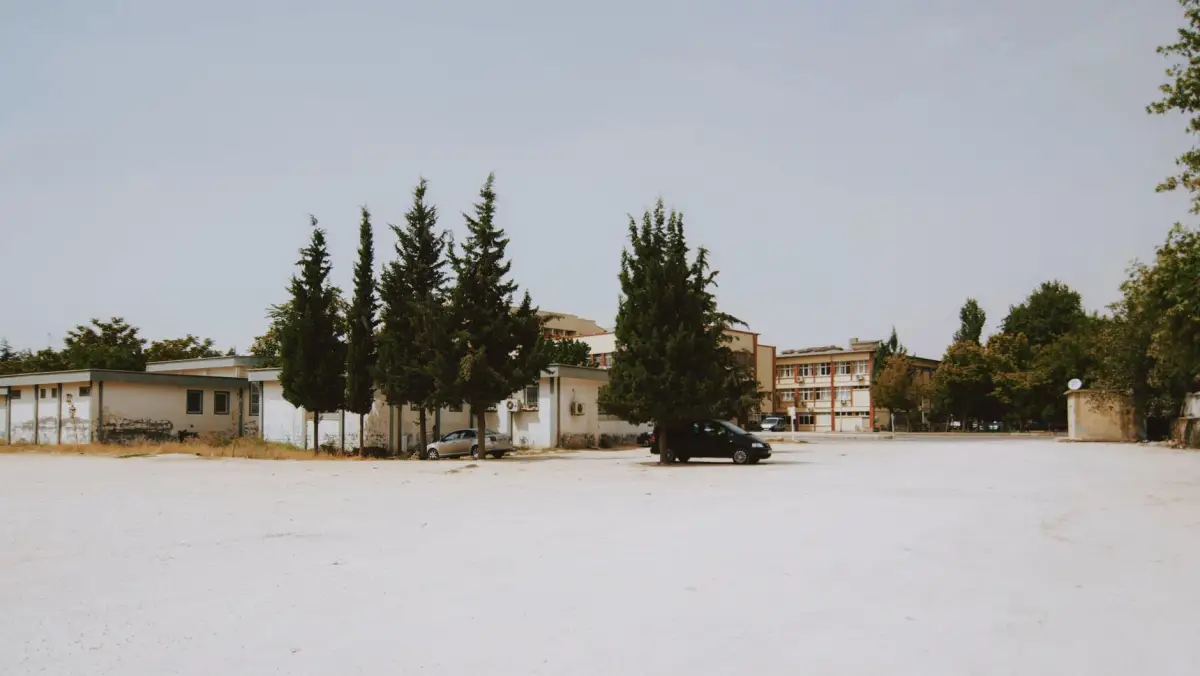
Commercial work is mostly the frontage along County Road 61 and the properties near the interstate junction, plus school and church grounds and rental property. Trees over parking, walkways and entrances get weighted by how many people pass under them rather than by size.
On a school or church property the constraint is the calendar. Work that closes a lot or a walkway gets scheduled around the times the ground is actually used, which usually means a summer weekday rather than whenever the weather is best. Larger commercial projects are covered on the commercial tree removal page.
Emergency Tree Removal in Esko, MN
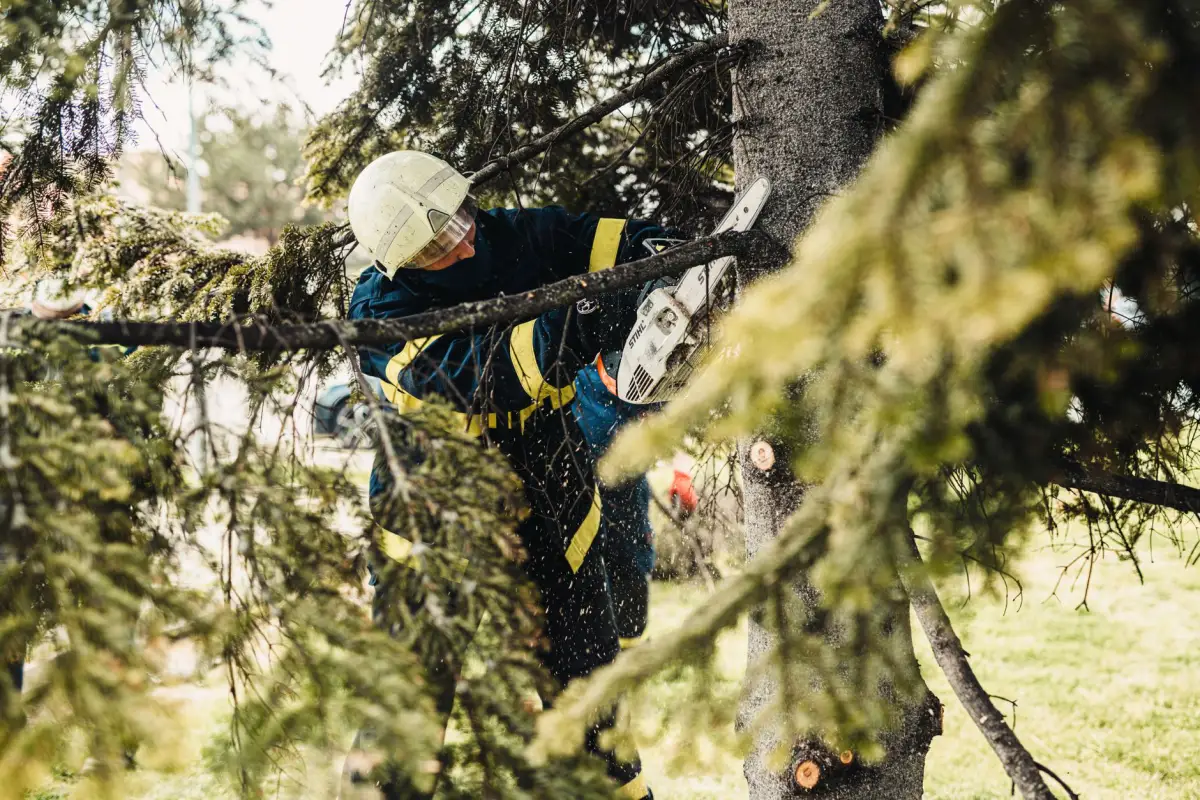
The emergency that comes up most here is a tree across a long private drive, which on a township parcel can mean a property is completely cut off, including to anyone who needs to reach it. Opening that access is the first job and it is often the whole first visit.
The second is wet snow load on planted conifer around the old farmsteads. Snow off Lake Superior lands heavy, and the limbs that come down are the ones that were already reaching further than they should have been. Nothing gets cut until what is holding the load has been worked out.
Our Tree Removal Process for Esko Properties
- 1
Walk the tree and the ground under it
The assessment starts at the base and works up, and about half of it is spent looking at things that are not the tree. Where is the drop zone, and is there one at all. Can a chip truck get within hose-length of the work, or does everything have to be carried out to the street. Where is the service drop from the pole, the gas meter, the septic lid, the leach field, the paver patio that will crack under a dropped round. Then the tree itself: lean and which way it is loaded, decay at the base, co-dominant stems with included bark, the condition of the root plate, whether the upper crown is sound enough to hold a rigging point. On a Duluth hillside lot the ground answers most of the questions before the tree does. A tree with a clean drop zone gets felled. A tree with a garage under it gets dismantled, and that is a different day and a different number. On an Esko property the walk includes two things that are invisible from the road: where the septic tank and drainfield run, and whether the private drive will carry a chip truck when it is soft.
- 2
Set the rig and clear the work area
Before a saw runs, the drop zone gets cleared and roped off, vehicles get moved, and anything that cannot take a falling limb comes out of the way. If the tree is coming apart in sections, the climber sets a rigging point above the first cut and runs a lowering line through a block so each piece is under tension before it is severed. On tight urban lots that block often gets set on a neighbouring tree or an anchor at the base to redirect the load away from the house. Speedlines get rigged where limbs have to travel horizontally over a fence or a garden rather than straight down. Where the tree is dead and the wood cannot be trusted, the plan changes — a lift goes in if the grade allows, or the tree gets taken in smaller pieces on lighter rigging that does not bet on the spar holding. On farm ground the redirect anchor is frequently a tree in the old field line rather than anything near the house, which keeps every load pulling away from the buildings.
- 3
Take it down in the order the site allows
A tree with room gets a face cut, a back cut and hinge wood sized to steer it, and it goes over in one piece into the cleared zone. Everything else comes down from the top. Limbs come off first, tied and lowered, working around the tree so the spar stays balanced and nothing loads it in one direction. Then the spar itself gets blocked down in rounds, each one roped and lowered rather than dropped, until the climber is low enough to fell the remaining stem safely. Spikes are used here because the tree is not staying — they have no place on a tree that is being pruned. As pieces reach the ground they get dragged clear immediately, because a cluttered landing zone is how the next piece ends up somewhere it was not supposed to go.
- 4
Chip, haul and rake out
Brush goes through the chipper as it comes down rather than piling up, which keeps the work area open and shortens the day. Trunk wood gets cut to whatever length was agreed — rounds stacked on site for firewood, or loaded and hauled. Where ash is involved, the destination matters: St. Louis County is inside the state emerald ash borer quarantine, and hardwood firewood cannot legally be moved out of a quarantined county unless it has been MDA-certified, so ash wood either stays local or goes to an approved site. The stump gets cut as low and level as the root flare allows, which makes grinding cheaper later if you want it done. Then the area gets raked out, chips blown off hard surfaces, and the drive and lawn checked for ruts before anyone leaves. On acreage most owners want the rounds kept, which is fine on your own property — the county quarantine restricts wood leaving the county, not wood staying put.
Access Sets the Price Here, Not Trunk Diameter
A phone number and a truck in the driveway don't make a company. Here's what's actually different about ours for a job in Esko, MN.
Storm Work Is Triaged, Not Queued
A trunk across the only way out, a limb hung up over a walkway, a tree leaning on a roof. Emergency calls are about making the hazard safe and reopening access first — the debris clearance gets scheduled after, and priced separately. Combining the two at emergency rates is where disputed storm bills come from.
The Estimate Happens On Site
Access and drop zone are the price, and a photo hides both. Expect someone to walk the ground, name the actual defect out loud, and put the number in writing before a saw runs.
Cleanup Is a Line Item
Chipped and hauled, rounds stacked in the yard, stump cut low for grinding later — those are different jobs at different prices. Agree which one you are buying before the work starts, because that is where the disputes land.
Nobody Offers to Top Your Tree
Topping does not fix a hazardous tree, it creates one, and a company that offers it as a cheaper alternative to proper crown work has told you what standard the rest of the job is held to. Spikes belong on removals only, never on a tree that is staying.

Why Esko Property Owners Need Professional Tree Care
No city forestry department to call
Esko is unincorporated, inside Thomson Township. In a city, the boulevard tree between the sidewalk and the street belongs to the city, and the city deals with it. Here the right of way belongs to whichever road authority owns the road — township or county — and there is no municipal crew who will come out and look at a declining tree for you. The practical consequence is that nobody is going to notice a dying ash on your property except you.
Septic fields and wells under the drop zone
Most property here is on well and septic, which puts two expensive things underground in places that are not marked on the surface. A dropped round will crack a septic lid and a stump grinder will happily chew into a lateral. Minnesota Statute Chapter 216D requires a Gopher State One Call locate at least two full business days before digging, and the contractor doing the work is responsible for placing it — but the locate covers utilities, not your drainfield. Where the septic runs is a question the homeowner has to answer.
Farmstead trees standing in residential yards
The land here was homesteaded from the 1870s onward and it has been converting to residential lots ever since. What that produces is a specific kind of tree: an old yard or field-edge tree that grew as part of a farm, sheltered on one or two sides by a row that is no longer there, now standing alone in a landscaped yard next to a house. Those trees did not develop for the exposure they currently have, and they are consistently the ones that fail first.
Carlton County's quarantine and where the wood goes
Carlton County is quarantined for emerald ash borer, with the Fond du Lac Reservation administered separately. The rule is about wood leaving the county: ash logs, ash chips and mulch, and all non-coniferous firewood need a Minnesota Department of Agriculture certificate to go. On acreage that mostly means the wood stays, which is fine — but it should be agreed before the work starts, because rounds stacked on site and rounds hauled away are two different prices.
Areas We Serve Throughout Esko
Esko's Corner and the village lots
The compact centre of the community, where lots are small enough that removals are dismantles and the neighbour's roofline matters. The corner takes its name from a store built there in 1919.
The County Road 61 frontage
Commercial and institutional property along the main route through, where the scheduling constraint is traffic and parking rather than the weather.
The township parcels
Larger lots on the township road grid, most on well and septic, many with long private drives and overhead service. This is where a felling is genuinely possible and where the drive itself is often the access constraint.
When We’re Not the Right Call
- You want somebody from the city to come and look at it first. There is no city here — Esko is an unincorporated community in Thomson Township, and there is no municipal forester in the way there would be in Cloquet or Duluth.
- The tree is in the road right of way rather than on your parcel. That belongs to the township or the county depending on the road, and it is not the adjacent owner's to arrange.
- The tree is growing into a power line. Line clearance is the job of the utility that owns the line and is normally done at no cost to you.
- It is a sapling under about four inches through. On acreage there are always a few of those, and a pole saw is the right tool rather than a crew and a chipper.
- The tree is healthy, well-placed and simply large. Big is not a defect, and on a several-acre parcel with nothing under it there is no argument for removing a sound tree at all.
- It is an oak and it is April through July. Minnesota DNR guidance is not to prune or cut oaks in that window because of oak wilt.
Frequently Asked Questions
- Do you serve Esko, MN?
- Yes. Esko is 13.4 miles west-southwest of Duluth in a straight line, right on Interstate 35, which makes it one of the easier places in Carlton County to reach. The whole community is covered, from the village lots at the corner out to the township parcels.
- Who handles a dead tree in the road right of way here?
- Whichever road authority owns the road — the township or Carlton County. Esko is unincorporated, so there is no city forestry department the way there is in Cloquet, and there is no municipal crew that inspects trees. If the tree is on your parcel it is yours, and the practical upshot is that nobody else is going to spot a declining ash on your property before you do.
- Will stump grinding damage my septic system?
- It can, and it is worth being specific about before anyone starts. A grinder goes below grade and will cut a septic lateral without noticing. The legally required Gopher State One Call locate — at least two full business days before digging under Minnesota Statute Chapter 216D, placed by the contractor — marks buried utilities, not your drainfield. Where the tank and field actually run is something the property owner needs to point out, ideally with the as-built if you have it.
- Can a tree on my acreage just be felled instead of dismantled?
- Often here, yes, and it is worth asking directly. A tree with a genuine drop zone gets a face cut, a back cut and hinge wood sized to steer it, and it goes over in one piece. The same tree dismantled from the top might be forty separate roped lowers. The two methods are not close on price, and on a township parcel with open ground there is no reason to pay for the expensive one.
- What time of year is best for tree work in Esko?
- Late winter into early spring for most pruning, and frozen ground is a real advantage on properties with a long soft driveway — a chip truck that would rut a drive in May crosses it without a mark in February. Oaks are the exception and should not be pruned or cut April through July under Minnesota DNR guidance. Removals happen year round, but winter access on acreage is genuinely easier.
Learn More
- Minnesota Department of Agriculture — Emerald Ash Borer Quarantine — Which counties are quarantined, what counts as a regulated article, and the certificate needed before ash wood or hardwood firewood leaves a quarantined county.
- Minnesota DNR — Tree Care and Forest Health — State guidance on tree condition, the pests and diseases active in Minnesota, and the oak wilt restriction on pruning or cutting oaks April through July.
- UMN Extension — Pruning Trees and Shrubs — Correct cut placement at the branch collar, why topping is not a treatment, and seasonal timing for most species grown in this part of the state.
Need Tree Service in Esko, MN?
Tell us what’s going on and get an immediate on-site quote — no charge for the estimate, and no obligation to book it.
Get My Free Estimate